
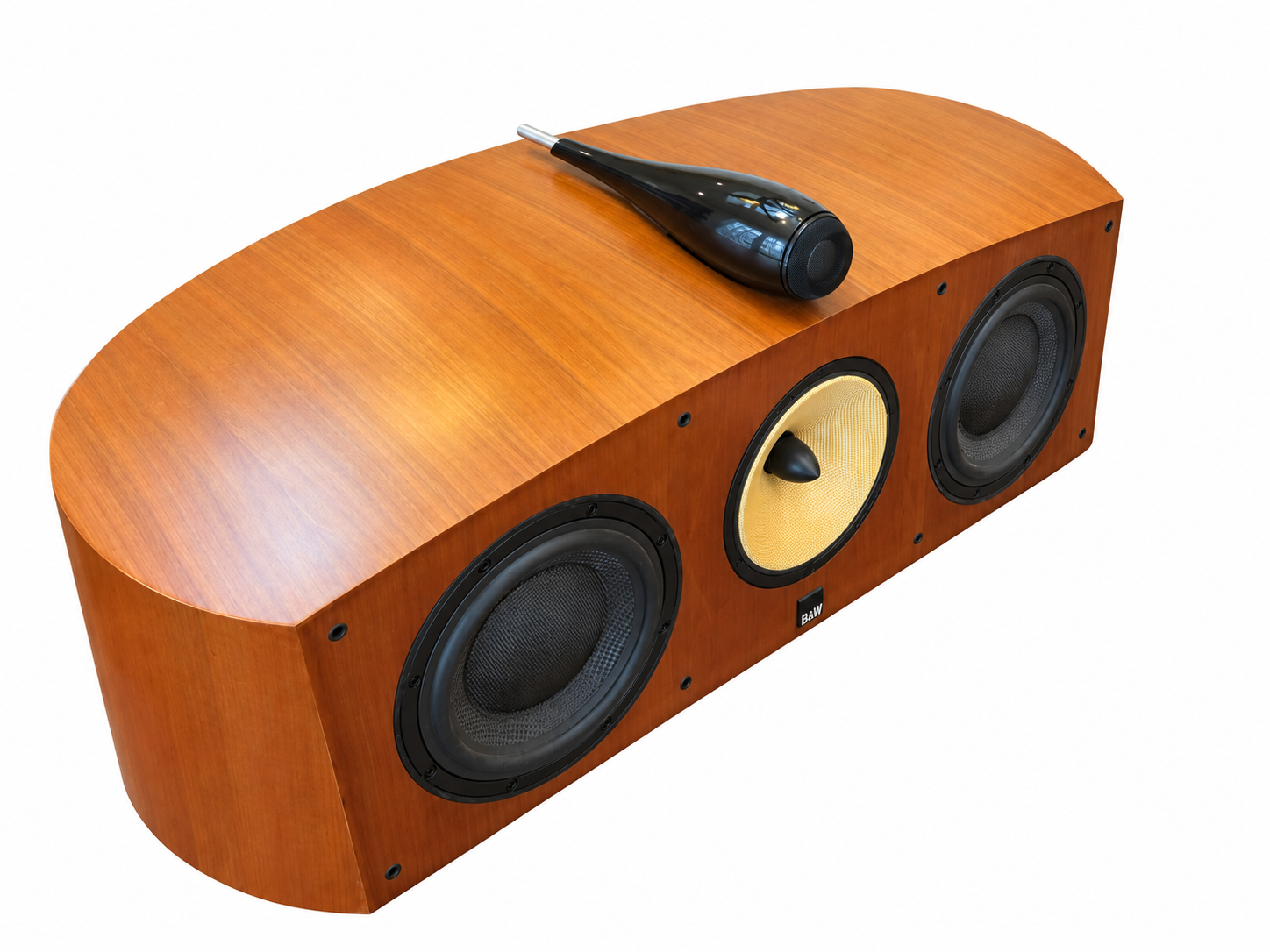
Could a centre speaker keep speech clear when a film filled the room with action? That was the job of the Bowers & Wilkins HTM2D in my system. I bought mine around 2009 and used it with 803D floorstanders and an Arcam P777 power amplifier. It was a substantial commitment to the front of the home cinema: a three-way centre with a diamond tweeter, a dedicated Kevlar midrange and a cabinet wide enough to demand proper space beneath the screen.
The opening of The Dark Knight gives me a much better way to explain its appeal than a list of materials. I remember the sound being crisp, with clear vocals and speech through that bank-robbery sequence. The HTM2D was doing the job I wanted from it. The words remained a memorable part of the scene, even in a film whose action could so easily dominate a conversation about sound.
A proper partner for the 803D
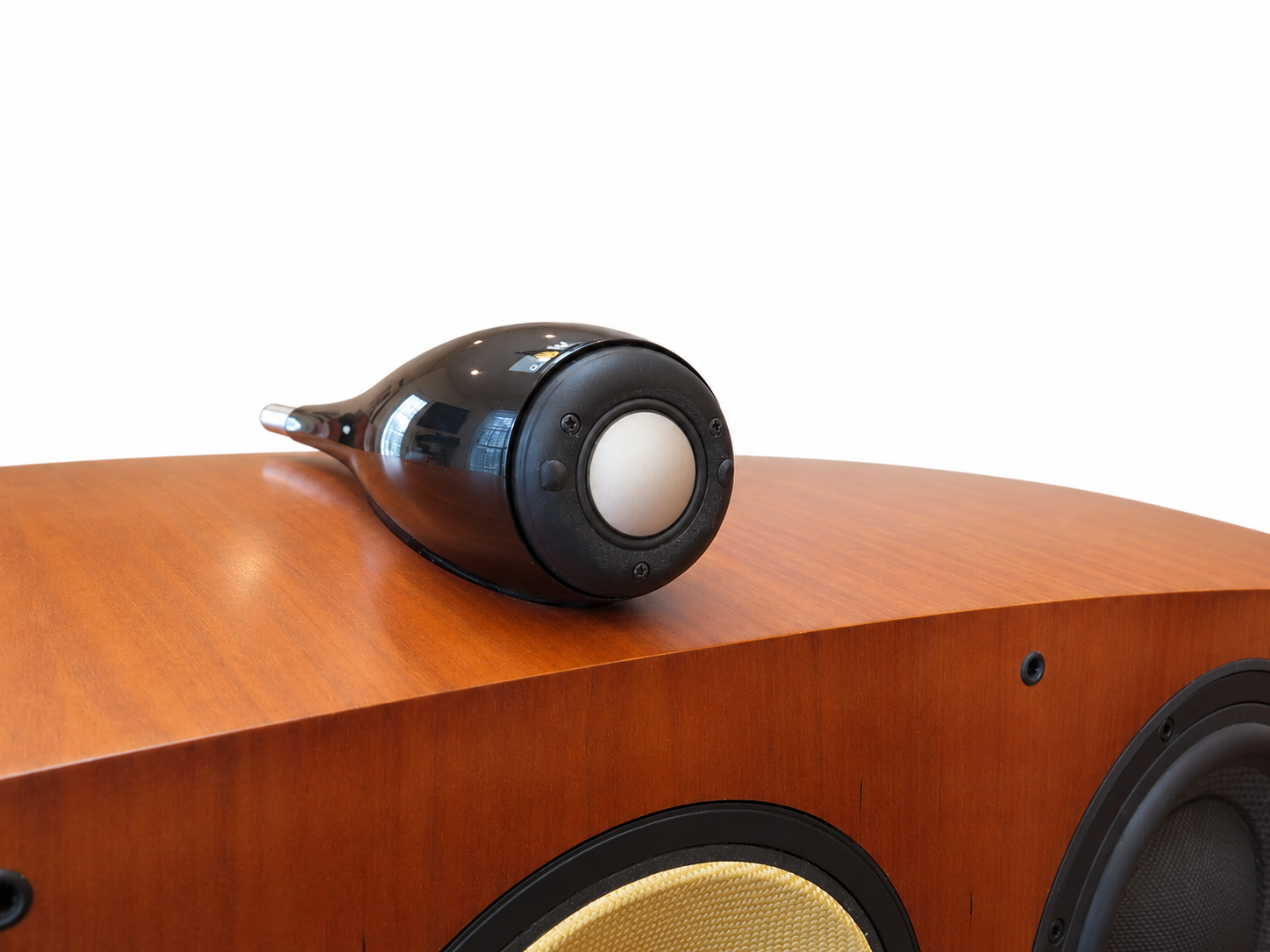
B&W designed the HTM2D to partner the 803D, and the relationship is easy to recognise. A yellow 150 mm Kevlar FST midrange sits between two 180 mm Rohacell bass drivers, with a 25 mm diamond dome in its own housing above the cabinet. The dedicated midrange gives the central part of a voice its own driver, while the bass units and tweeter handle the regions on either side.
That arrangement interested me because I already valued the Kevlar midrange and diamond tweeter in the 803Ds. Keeping those technologies across the front made sense as a system choice. It does not mean three different cabinets automatically sound identical: placement, channel level and the room still matter. It does explain why the HTM2D belonged on my shortlist rather than being treated as an unrelated box added after the main speakers.
Dialogue earns its place
A good centre has to do more than make a voice prominent. Speech contains changes of emphasis, pace and level that tell us how a character feels. Raising the centre level can make every line louder, but that alone is not the same as making the performance intelligible. My lasting impression of the HTM2D was the clarity of the dialogue, and the opening of The Dark Knight remains the scene that brings that impression back.
I would also separate the centre’s contribution from the excitement of the whole surround system. The P777 was the power amplifier; decoding the soundtrack and directing each channel was the processor’s job. The subwoofer and main speakers had their own work to do. The HTM2D’s value was in its part of that presentation, particularly the voices that carried the story across the screen.
Two Blu-rays from the period
Film: The Dark Knight (2008)
Director: Christopher Nolan
Scene: Opening bank robbery
Source: Blu-ray
Picture: 1080p
Format: Dolby TrueHD 5.1
The bank robbery introduces its characters through short exchanges as the plan unfolds. That makes the speech as important as the spectacle: the lines explain the relationships between the robbers and set up the scene’s surprises. Through my HTM2D, the audio sounded crisp and the speech clear. That is the detail I remember, and it is why this opening belongs in the review. The centre helped keep my attention on what was being said within the action.
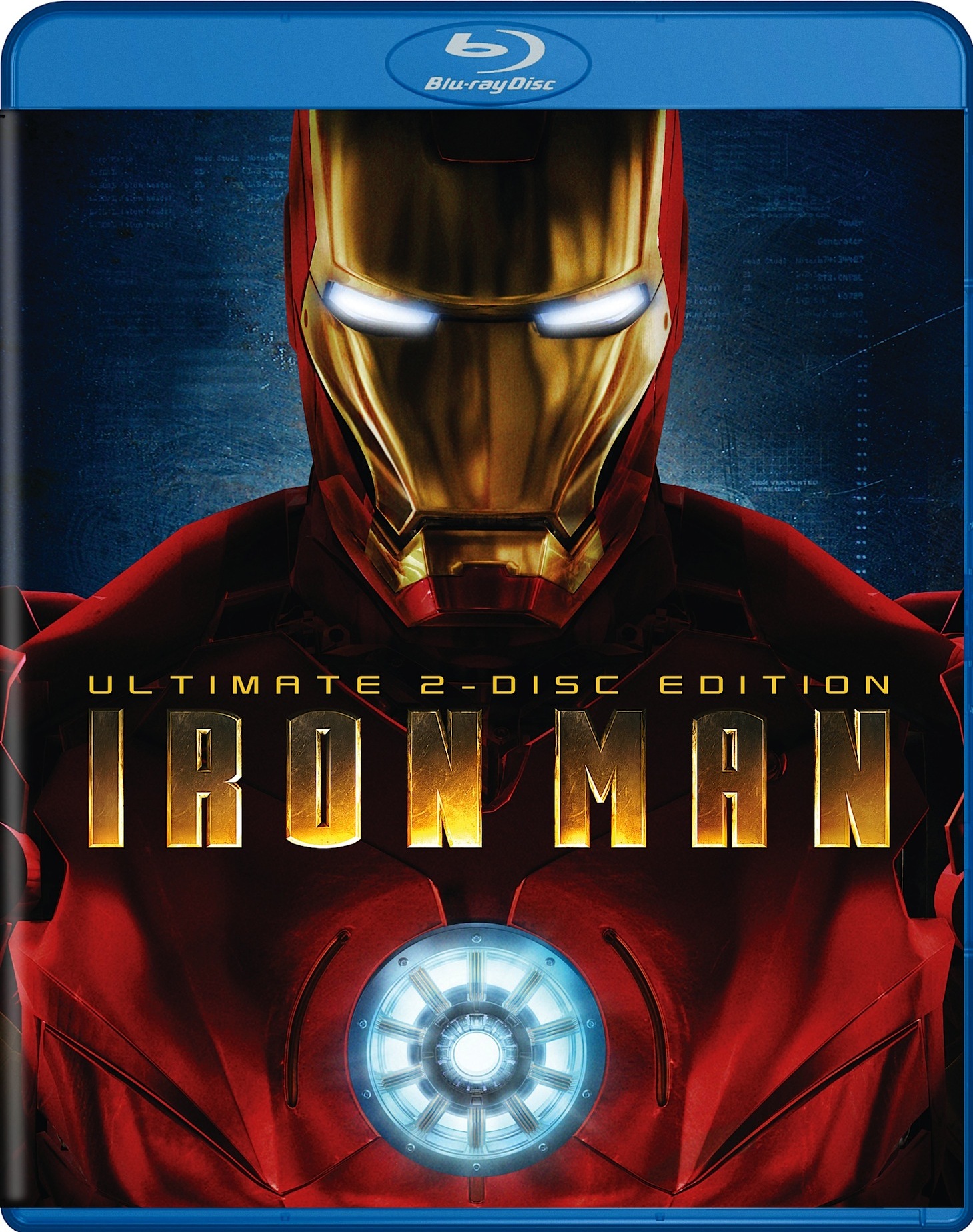
Film: Iron Man (2008)
Director: Jon Favreau
Scene: Opening convoy sequence
Source: Blu-ray
Picture: 1080p
Format: Dolby TrueHD 5.1
I enjoyed Iron Man’s opening too. The convoy sequence moves from Tony Stark’s relaxed conversation with the soldiers to an abrupt attack, giving the film an immediate change of mood. It is a useful companion to The Dark Knight because the opening depends on both the personality in the dialogue and the scale of what follows. My recollection is of enjoying the sequence as a whole. The bank robbery remains my more specific example of the HTM2D’s crisp speech reproduction.
The space it needs is real
At 841 mm wide, 387 mm deep and 31 kg, the HTM2D needs a serious shelf or stand. Those dimensions deserve attention before purchase, particularly when a screen or cabinet has already fixed the available space. The curved enclosure looks elegant in isolation, but the two rear-facing ports and the speaker connections also need room. A shelf that only just accommodates the cabinet is unlikely to make installation convenient.
B&W offered the FS-HTM stand with zero, four or eight degrees of backward tilt, allowing a low-mounted speaker to be aimed towards the listeners. That is a practical detail worth retaining. I would check speech from each regular seat and avoid a furniture lip directly in front of the baffle. The same dialogue passage makes a more useful placement check than repeatedly changing films and volume levels.
The electrical load deserves similar care. B&W quotes 90 dB sensitivity and an eight-ohm nominal impedance, with a minimum of 3.1 ohms. The P777 was the amplifier in my system, but the broader consideration is an amplifier suited to that load. Set the channel levels and bass management at the processor, then judge the centre as part of the complete front system.
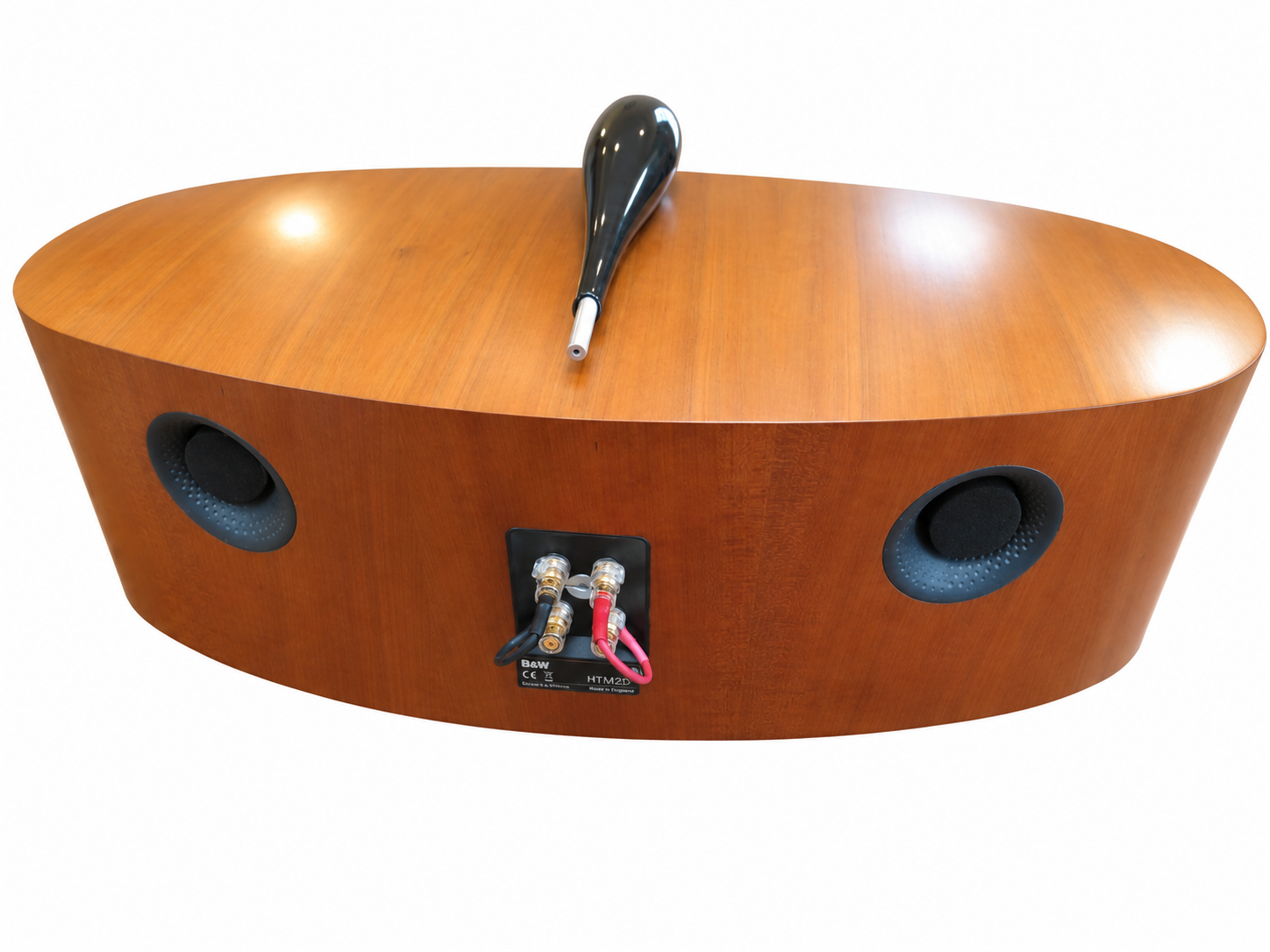
Did the HTM2D keep the dialogue clear when the action started? In my system, yes. The crisp speech in The Dark Knight’s opening is the clearest reason I remember it fondly, while Iron Man’s opening reminds me of the enjoyment of that home-cinema setup. It required space and suitable support, but alongside the 803Ds it earned its place. A centre speaker succeeds when the characters remain as engaging as the action around them.
Specifications
Manufacturer specifications for the original HTM2D, not the later HTM2 Diamond or D3/D4 models.
| Specification | Details |
|---|---|
| Type | Three-way vented-box centre speaker |
| Tweeter | 1 × 25 mm diamond dome |
| Midrange | 1 × 150 mm woven-Kevlar FST cone |
| Bass drivers | 2 × 180 mm Rohacell cones |
| Crossover frequencies | 350 Hz and 4 kHz |
| Frequency response | 41 Hz–28 kHz, ±3 dB on reference axis |
| Frequency range | −6 dB at 35 Hz and 33 kHz |
| Sensitivity | 90 dB SPL (2.83 V, 1 m) |
| Impedance | 8 Ω nominal; 3.1 Ω minimum |
| Recommended amplification | 50–300 W into 8 Ω on unclipped programme |
| Dimensions (H × W × D) | 329 × 841 × 387 mm |
| Weight | 31 kg |
| Finishes | Cherrywood, Rosenut, Black Ash |