
The diamond tweeter made the Bowers & Wilkins 803D easy to remember. Living with the speaker, though, gave me another reason to appreciate it: the midrange from that unmistakable yellow Kevlar driver. B&W introduced the original 803D with its 2005 800 Series, bringing its diamond technology into a tall, comparatively slender floorstander. Looking back at my pair, the question is straightforward. Was the tweeter the whole story, or did the music between the bass and treble matter just as much?
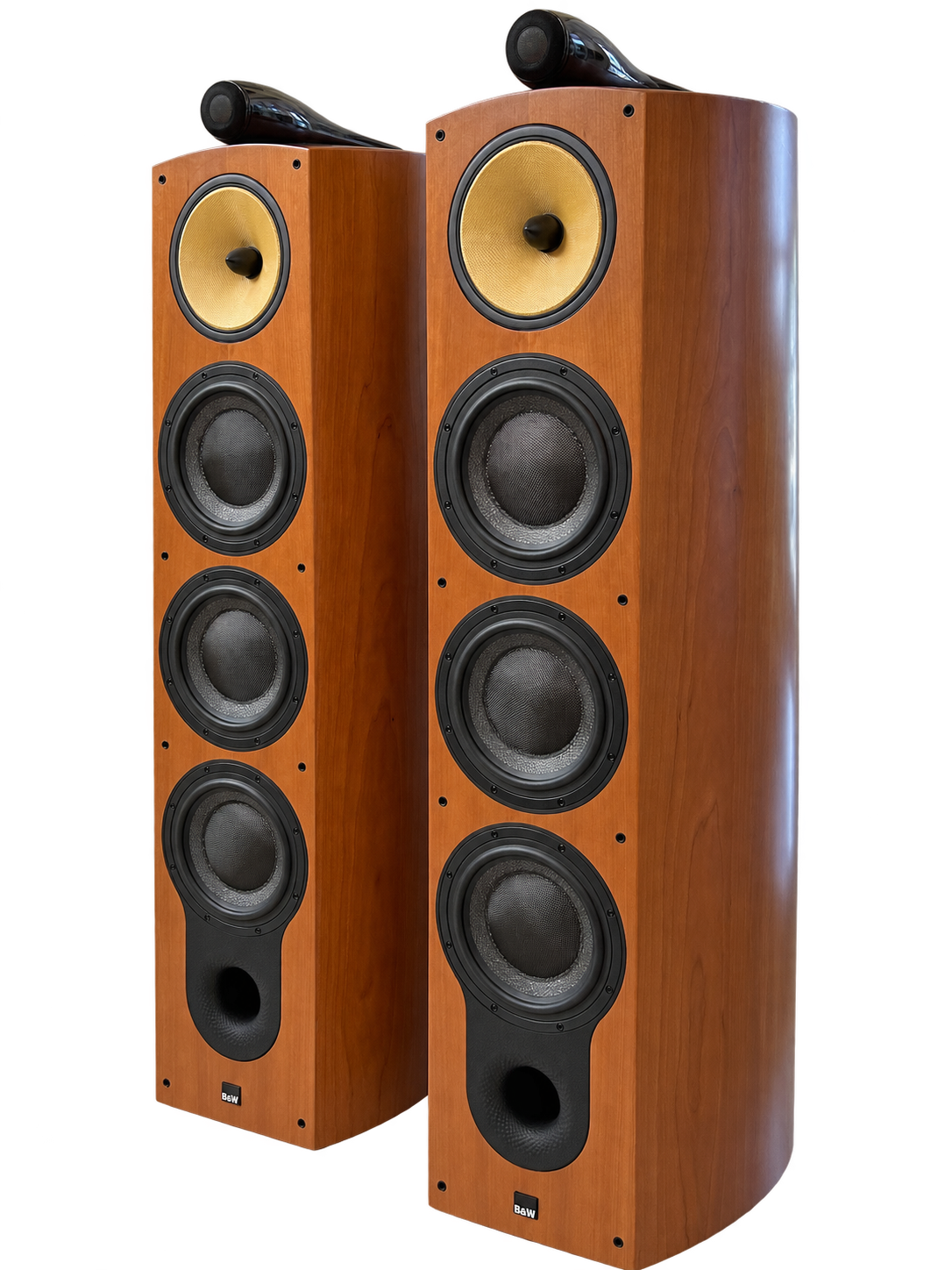
My 803Ds formed part of a system with an Arcam P777 power amplifier and B&W’s HTM2D centre speaker. The floorstanders served both music and home cinema. The two qualities I remember most clearly are the Kevlar midrange and that sensational diamond tweeter. They remain the starting point for my appreciation of the speaker.
What the original 803D brought to the room
This is the original 803D, with a 25 mm diamond dome above a 150 mm Kevlar FST midrange and three 180 mm Rohacell bass drivers. The midrange occupies an isolated section of the curved, Matrix-braced enclosure. Unlike the larger 802D, it sits within the main cabinet rather than in a separate head. The resulting shape is substantial but familiar: a wooden floorstander with the black tweeter housing perched on top.
The proportions deserve a closer look. At 306 mm wide, the 803D presents a relatively narrow face, but its cabinet extends 457 mm into the room and stands 1,164 mm high without feet. Each speaker weighs 45 kg. Those figures explain why placement needs planning. The front-facing port does not remove the influence of nearby walls; the distance behind the cabinet and the position of the listening seat still affect the bass balance.
The midrange matters
The yellow cone is an obvious visual signature, but my attachment to it is musical. The midrange was one of the things I liked most about the 803D. For someone whose listening centres on jazz and blues, that is a considerable part of the speaker’s appeal. Voices, saxophones and much of the character of a guitar occupy this region. It carries the phrasing and expression that keep a performance interesting after the initial impression has passed.
I would not put that attraction down to Kevlar alone. The driver, its enclosure and the crossover form a system, and the listener hears the result. What matters in my recollection is that the midrange belongs alongside the diamond tweeter when describing why I enjoyed these speakers. Focusing exclusively on the expensive material at the top would leave out a large part of their appeal.
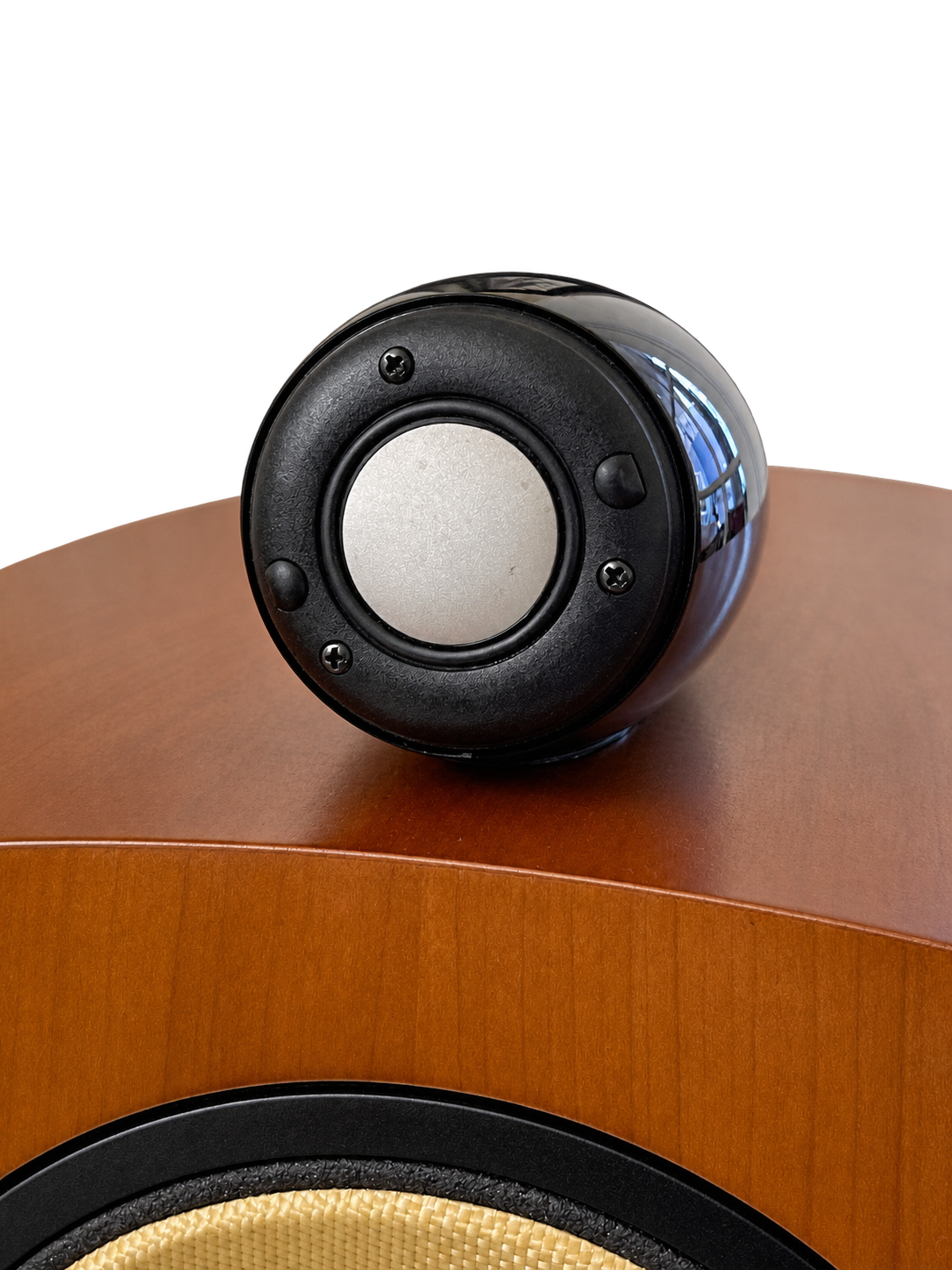
And then there is the diamond tweeter
Sensational is still the word I would use for the tweeter. It was a defining attraction of the 803D for me, and it remains the feature most likely to start a conversation about this generation of B&W. There is, however, more to assessing treble than noticing how much of it a recording contains. The leading edge of a plucked string, the upper harmonics of a saxophone and the decay of a cymbal all belong to a larger musical event.
That is why I keep returning to the midrange in the same discussion. My enthusiasm for the 803D rests on both areas. An arresting high-frequency presentation is especially valuable when the voice or instrument underneath it is also engaging. Jazz and blues put those priorities into a familiar musical context, where the relationship between an instrument’s body and its higher harmonics is easy to follow.
Jazz and blues on CD

Album: Soulville
Artist: Ben Webster
Track: “Where Are You?”
Source: CD
Format: PCM · 16-bit / 44.1 kHz
Webster’s ballad playing gives “Where Are You?” its appeal. The tenor carries the melody through the shape and length of each phrase, with the surrounding accompaniment leaving room for that expression. It is a useful musical counterpart to what I value in the 803D’s midrange: attention to the instrument carrying the tune. The interest lies in the whole saxophone line, including the way a note begins and fades, rather than in isolating a breath or a bright overtone as a separate effect.

Album: Blues Singer
Artist: Buddy Guy
Track: “Hard Time Killing Floor”
Source: CD
Format: PCM · 16-bit / 44.1 kHz
“Hard Time Killing Floor” opens Buddy Guy’s 2003 album with voice and acoustic guitar at the centre of the performance. That combination brings the relationship between the middle and upper frequencies into focus. The plucked strings have an initial attack, but the guitar body and Guy’s vocal delivery give the song its substance. For this review, it provides a blues companion to Webster’s ballad and a clear musical reason to discuss the Kevlar driver and diamond dome together.
A speaker worth building a system around
The P777 is the amplifier I used, rather than a prescription for every 803D system. B&W specifies 90 dB sensitivity alongside an eight-ohm nominal impedance that falls to three ohms. Amplifier suitability therefore involves its ability to drive the load, as well as its headline power rating. The physical space for the cabinets and the freedom to position them deserve equal consideration.
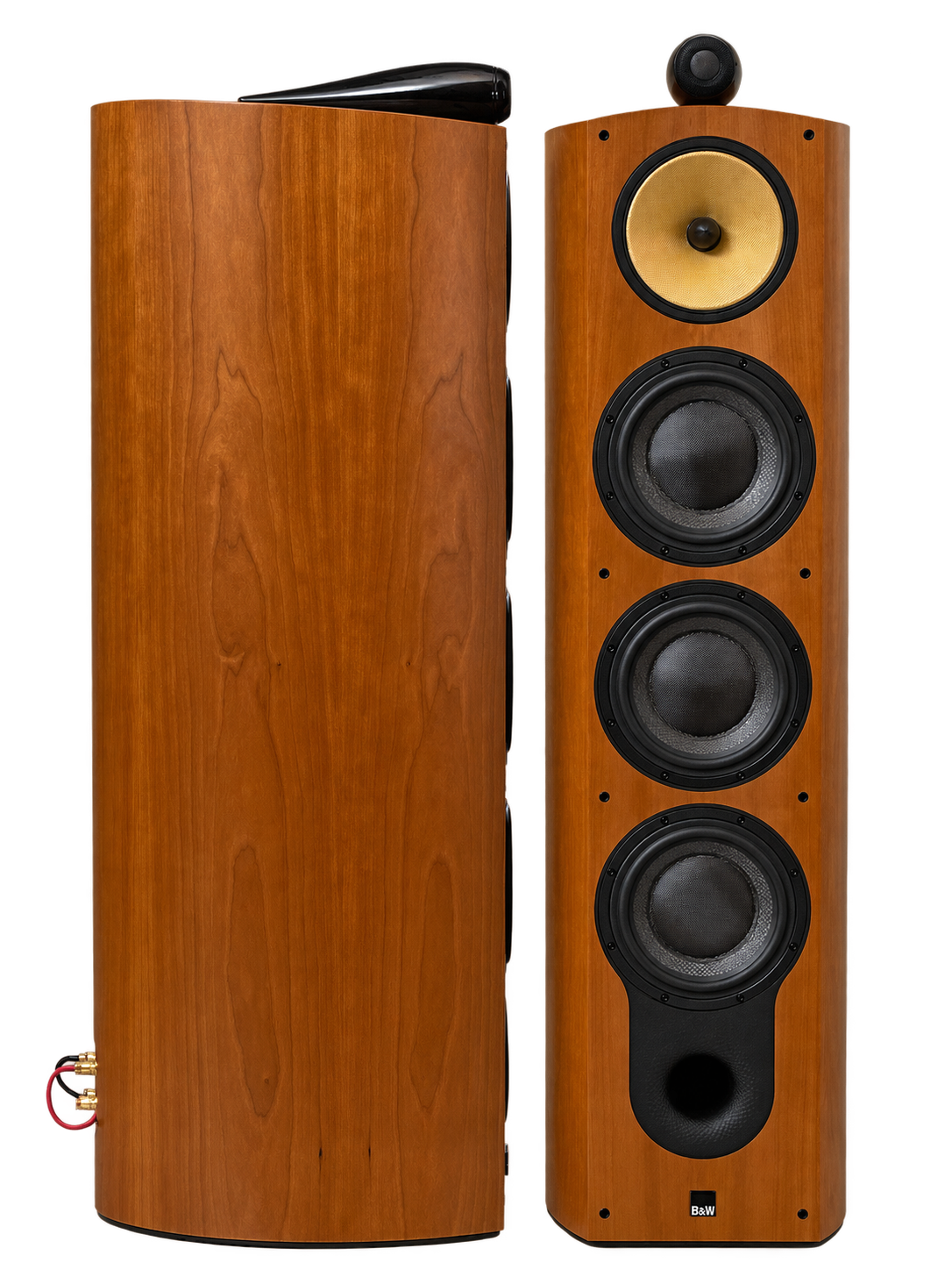
Was the diamond tweeter the whole story? For me, the answer is no. It was sensational, but the Kevlar midrange was just as important to why I liked the 803D. Those are the qualities I would carry forward from owning this pair. The three-way design, substantial bass section and matching HTM2D made sense within my system; the midrange and tweeter are what make the speakers memorable.
Specifications
Manufacturer specifications for the original Bowers & Wilkins 803D.
| Specification | Details |
|---|---|
| Type | Three-way, vented-box floorstanding loudspeaker |
| Tweeter | 25 mm diamond dome |
| Midrange | 150 mm woven-Kevlar FST cone |
| Bass drivers | Three 180 mm Rohacell cones |
| Crossover frequencies | 350 Hz and 4 kHz |
| Frequency response | 35 Hz–28 kHz, ±3 dB on reference axis |
| Frequency range | −6 dB at 28 Hz and 33 kHz |
| Sensitivity | 90 dB SPL, 2.83 V at 1 m |
| Impedance | 8 Ω nominal; 3 Ω minimum |
| Recommended amplification | 50–500 W into 8 Ω with unclipped programme |
| Dimensions — H × W × D | 1,164 × 306 × 457 mm, excluding feet |
| Weight | 45 kg each |
| Finishes | Cherrywood, Rosenut, Black Ash |