
Lil' Ed & The Blues Imperials
Chicken, Gravy & Biscuits.
Two evenings, a touring quartet and friends in the control room shaped Lil’ Ed and the Blues Imperials’ second album, Chicken, Gravy & Biscuits.
A show inside Streeterville
Bruce Iglauer remembered Lil’ Ed Williams moving around the studio, laughing and performing as he would onstage. For Chicken, Gravy & Biscuits, Alligator staff and friends watched and cheered from the control room while the quartet played together. Iglauer’s liner notes describe two evenings of recording, with no overdubs and enough time for alternate takes of Ed’s new songs.
The method continued an approach established on Roughhousin’, the band’s debut. That earlier recording began as a session for a single anthology track and expanded into an album agreement. By the second record, the Blues Imperials had become a touring band, with a Japanese tour alongside Albert Collins among their engagements. The follow-up captured a group returning to the studio after that experience.
A changed quartet and a family dedication
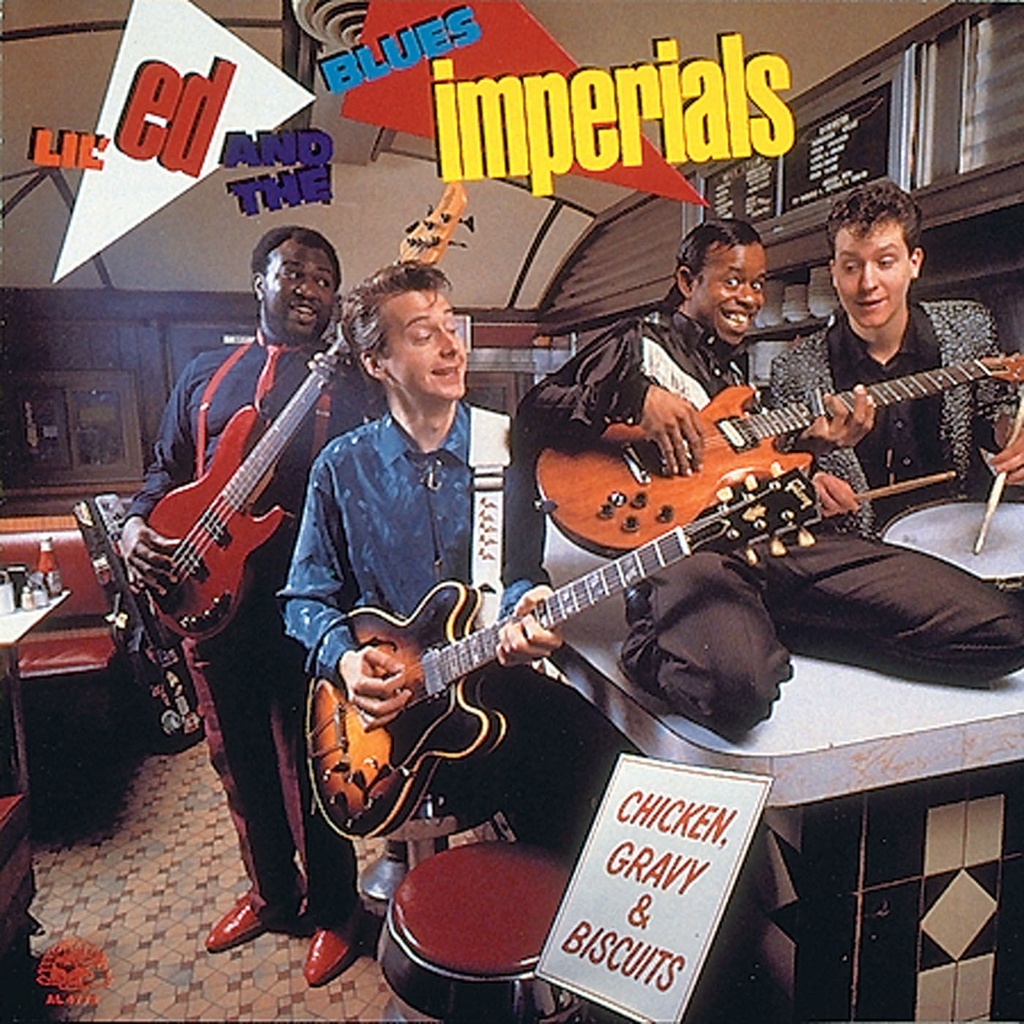
Two players had changed since the first lineup. Guitarist Mike Garrett and drummer Kelly Littleton joined Williams and bassist James “Pookie” Young after Dave Weld and Louis Henderson left. On this album, Williams takes guitar and vocal duties, Garrett supplies the second guitar, and Young and Littleton form the bass-and-drums partnership. The four players share the artist credit, and the band co-produced the recording with Iglauer.
The original LP is dedicated to Ed and Pookie’s uncle, J.B. Hutto. His presence also enters the repertoire through “20% Alcohol”, credited to Hutto on the sleeve. Albert Collins’s “Master Charge” is the other credited outside composition, alongside Williams’s own material. These names link the programme to the family dedication and to a guitarist with whom the band had toured.
The session on record
The recording location was Streeterville Studios in Chicago. Justin Niebank and Jay Shilliday engineered the album, and Niebank mixed it; Peter Amft supplied the credited cover photography and design. The production credits describe the studio work behind the performance, while Iglauer’s account explains the decision to record the musicians together. His description of two evenings gives the session’s working span, without supplying calendar dates.
Alligator released Chicken, Gravy & Biscuits in 1989. The vinyl programme, catalogue AL 4772, has ten tracks; the CD, ALCD 4772, adds “Got to Be Wise” after “Blues for Jeanette”. The table below follows that eleven-track CD sequence, also used on the artist’s album page. Both programmes end with “Blues Imperials Theme”.
Iglauer’s recollection places the audience on the other side of the studio glass. That is the particular setting preserved here: a working band making its second album while friends responded to the performance in the room next door.
Track list
| No. | Track | Top pick |
|---|---|---|
| 1 | Chicken, Gravy And Biscuits | ✓ |
| 2 | Master Charge | ✓ |
| 3 | S.D. Jones | |
| 4 | Walkin' | |
| 5 | Blues For Jeanette | |
| 6 | Got To Be Wise | |
| 7 | Can't Let These Blues Go | |
| 8 | 20% Alcohol | |
| 9 | Face Like A Fish | |
| 10 | Got My Mind Made Up | |
| 11 | Blues Imperials Theme |
Recommended versions
Vinyl: 1989 Alligator Records (AL 4772, US). In 289 Discogs collections. Community rating: 4.52/5 from 21 votes. View this Vinyl edition ↗
CD: 1989 Alligator Records (ALCD 4772, UK, Europe & US). In 147 Discogs collections. Community rating: 4.00/5 from 10 votes. View this CD edition ↗
Album details
| Original release | 1989 |
|---|---|
| Label / catalogues | Alligator Records; AL 4772 (LP); ALCD 4772 (CD) |
| Genre | Chicago blues |
| Recording | Streeterville Studios, Chicago; two evenings; no overdubs |
| Musicians | Lil’ Ed Williams: guitar and vocals; Mike Garrett: guitar; James “Pookie” Young: bass; Kelly Littleton: drums |
| Producers | Lil’ Ed & The Blues Imperials; Bruce Iglauer |
| Engineers | Justin Niebank; Jay Shilliday |
| Mixing | Justin Niebank |
| Cover photography / design | Peter Amft |
| Tracks | 10 on original LP; 11 on CD (CD sequence below) |
Sources: Bruce Iglauer’s original liner notes, Alligator Records; Lil’ Ed & The Blues Imperials official album page; original LP and CD sleeve credits reproduced on Discogs.