
Sam Rivers
Fuchsia Swing Song.
A tune for Beatrice Rivers connects Sam Rivers’ first Blue Note album with the musical partnerships that shaped his career.
A melody at home
Sam Rivers was following his daily composing routine when a melody brought his wife to mind. In Blue Note’s account, Tony Williams arrived for their regular jam session and Ron Carter stopped by as well. Rivers played them the new tune, and it began to take shape. The piece became Beatrice, a composition whose life would extend well beyond the album on which he first recorded it.
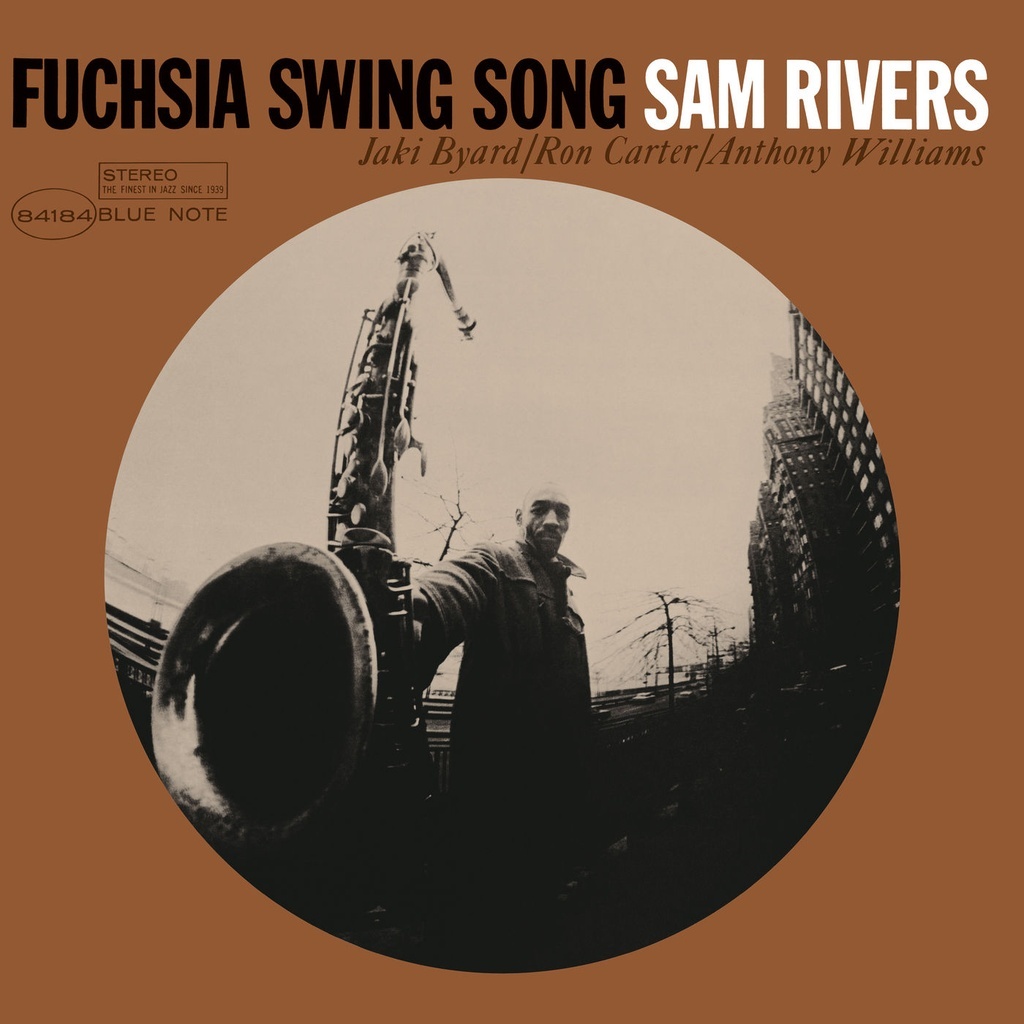
That album was Fuchsia Swing Song, Rivers’ debut as a leader for Blue Note. Its six pieces were all his own compositions. Alongside the title track, the programme included Downstairs Blues Upstairs, Cyclic Episode, Luminous Monolith, Beatrice and Ellipsis. The personal dedication sat within a complete statement of his work as a composer.
From Boston to Blue Note
The quartet drew on relationships formed before this recording. Rivers had moved to Boston in 1947 and studied at the Boston Conservatory and Boston University. In Herb Pomeroy’s band he played alongside pianist Jaki Byard. By 1959 he was also working with the thirteen-year-old Williams, developing a group that explored free improvisation. Their association preceded Williams’ arrival in Miles Davis’ band.
Rivers moved to New York in 1964. That July, Davis hired him on Williams’ recommendation for three concerts in Japan, one of which was recorded. In August Rivers appeared on Life Time, Williams’ first Blue Note album as a leader. His own session followed in December, bringing Carter and Williams together with Byard under Rivers’ name.
The quartet and the dedication
Fuchsia Swing Song was recorded on 11 December 1964 at Van Gelder Studio in Englewood Cliffs, New Jersey, and released by Blue Note in 1965. Alfred Lion produced the session, with Rudy Van Gelder recording it. Rivers played tenor saxophone, Byard piano, Carter bass and Williams drums. The original running order places Beatrice fifth, before Ellipsis closes the record. This is the original six-track programme, rather than a later edition’s expanded sequence of alternate takes.
The partnership behind the dedication continued beyond the composition. Sam and Bea opened a studio in Harlem in 1970, later relocating to a warehouse in Soho. Studio Rivbea became a performance space for experimental jazz, while Beatrice managed their Rivbea Productions company. Her name belonged to the practical life of the music as well as to one of Rivers’ compositions.
The tune also travelled through other musicians’ repertoires. Carter returned to Beatrice on Joe Henderson’s Village Vanguard recording in 1985, released on The State of the Tenor. A melody first shared with Williams and Carter had become a point of connection between recordings, while keeping its original dedication.
Track list
| No. | Track | Top pick |
|---|---|---|
| 1 | Fuchsia Swing Song | |
| 2 | Downstairs Blues Upstairs | |
| 3 | Cyclic Episode | |
| 4 | Luminous Monolith | |
| 5 | Beatrice | ✓ |
| 6 | Ellipsis |
Recommended versions
Vinyl: 2023 Blue Note, catalogue 4859563 / 00602448595638 / 84184 / BST 84184 / ST-84184, Worldwide. In 2,893 Discogs collections; community rating 4.70/5 from 254 votes. View this Vinyl edition ↗
CD: 2003 Blue Note, catalogue 7243 5 93874 2 0, Europe. In 218 Discogs collections; community rating 4.53/5 from 15 votes. View this CD edition ↗
Album details
| Original release | 1965 |
|---|---|
| Label | Blue Note |
| Genre | Jazz |
| Recording | 11 December 1964 · Van Gelder Studio, Englewood Cliffs, New Jersey |
| Musicians | Sam Rivers · tenor saxophone; Jaki Byard · piano; Ron Carter · bass; Tony Williams · drums |
| Producer | Alfred Lion |
| Recording engineer | Rudy Van Gelder |
| Tracks | 6 |
Sources: Blue Note Records: Sam Rivers biography and Beatrice: A Tale of a Tune; Universal Music Japan; original album credits; Discogs edition records.