
Wayne Shorter
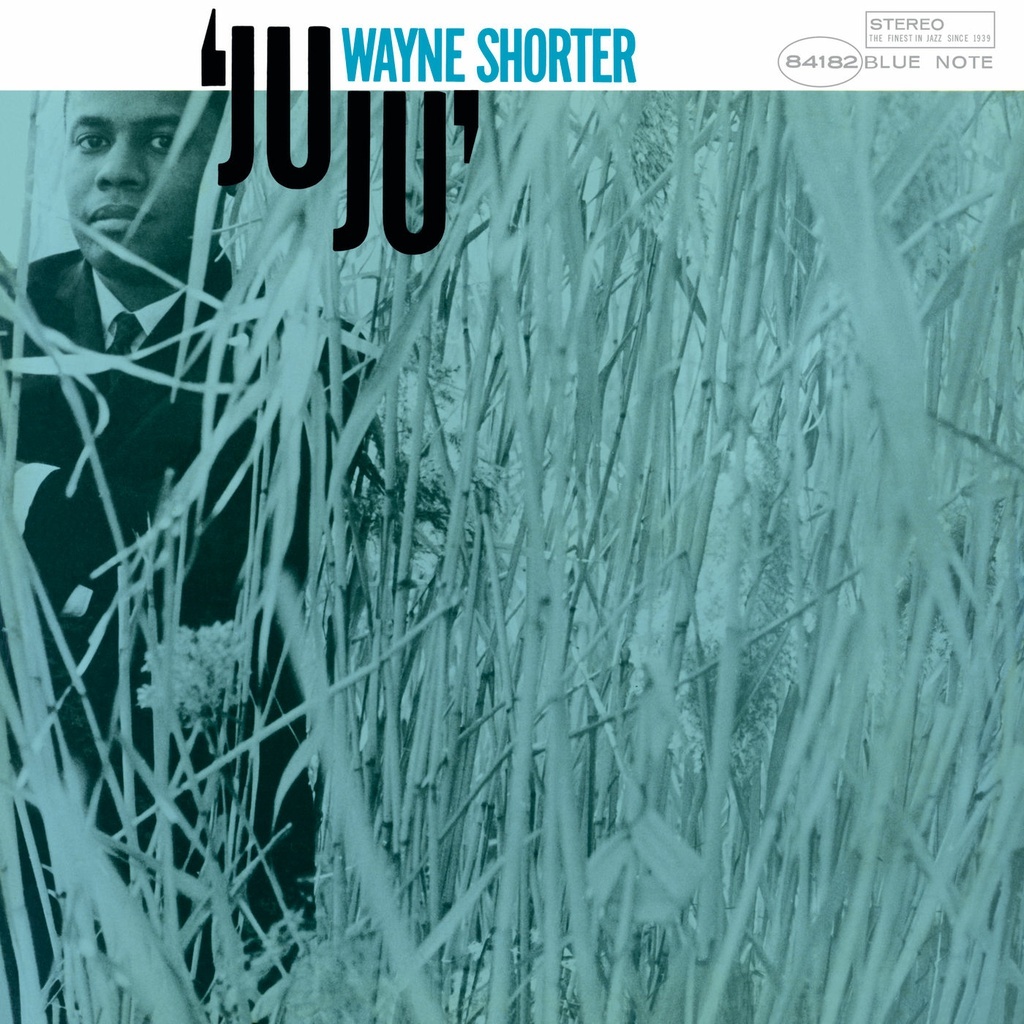
Juju.
A familiar rhythm section, a single horn and six originals place JuJu between Wayne Shorter’s Jazz Messengers years and his arrival with Miles Davis.
Keeping the band, changing the frame
For JuJu, Wayne Shorter brought back the rhythm section from Night Dreamer but made his tenor saxophone the quartet’s only horn. McCoy Tyner, Reggie Workman and Elvin Jones all had strong connections to John Coltrane. The programme, however, consisted entirely of Shorter compositions.
Shorter was building a Blue Note catalogue rather than beginning his recording career. He had already made three leader albums for Vee-Jay. His second Blue Note session followed Night Dreamer by three months, after five years as saxophonist, composer and musical director with Art Blakey’s Jazz Messengers.
Six pieces with their own premises
Blue Note’s Dan Ouellette describes two particularly concrete starting points for the writing. “Mahjong” takes its inspiration from the architecture of the Chinese board game. “Twelve More Bars to Go” turns its title into a double meaning: a twelve-bar blues about a drinker working his way around twelve drinking establishments.
The original LP contains six performances. The 1999 CD adds alternate takes of “JuJu” and “House of Jade”, bringing that edition to eight tracks. They document alternative performances of existing compositions, rather than two additional Shorter pieces.
One session, several later masterings
The quartet recorded on 3 August 1964 at Van Gelder Studio in Englewood Cliffs, New Jersey. Alfred Lion produced the album and Rudy Van Gelder recorded it. Blue Note released the original programme in 1965, with BLP 4182 identifying the mono issue and BST 84182 the stereo. Recording date and release year therefore describe different points in the album’s history.
Later editions have their own production credits. The 1999 CD used a remaster credited to Van Gelder from 1998 and identifies its analogue-to-digital transfers as 24-bit. Michael Cuscuna produced that reissue, which retained Nat Hentoff’s original notes and added notes by Bob Blumenthal. Blue Note’s 2024 Classic Vinyl edition instead documents all-analogue stereo mastering by Kevin Gray from the original master tapes, with 180g records pressed at Optimal. Those credits belong to the respective reissues.
Shorter joined Miles Davis’s quintet a month after the JuJu session. When the album appeared, that new chapter was already under way. JuJu preserves the other part of that transition: Shorter leading a quartet through a complete programme of his own writing.
Track list
| No. | Track | Composer | Top pick |
|---|---|---|---|
| 1 | JuJu | Wayne Shorter | ✓ |
| 2 | Deluge | Wayne Shorter | |
| 3 | House of Jade | Wayne Shorter | ✓ |
| 4 | Mahjong | Wayne Shorter | |
| 5 | Yes or No | Wayne Shorter | |
| 6 | Twelve More Bars to Go | Wayne Shorter |
Recommended versions
Vinyl: 2024 Blue Note (5880786 / 00602458807868 / 84182 / ST-84182 / BST 84182, Worldwide). In 2,667 Discogs collections. Community rating: 4.81/5 from 252 votes. View this Vinyl edition ↗
CD: 1999 Blue Note (7243 4 99005 2 3 / 499 0052, Europe). In 1,036 Discogs collections. Community rating: 4.27/5 from 105 votes. View this CD edition ↗
SACD: 2025 Blue Note (PROZ-1151, Japan). In 51 Discogs collections. Community rating: 4.75/5 from 8 votes. View this SACD edition ↗
Album details
| Original release | 1965 |
|---|---|
| Label | Blue Note |
| Original catalogue | BLP 4182 (mono); BST 84182 (stereo) |
| Genre | Jazz; post-bop |
| Recorded | 3 August 1964 |
| Studio | Van Gelder Studio, Englewood Cliffs, New Jersey |
| Musicians | Wayne Shorter: tenor saxophone; McCoy Tyner: piano; Reggie Workman: bass; Elvin Jones: drums |
| Composer | Wayne Shorter (all six original tracks) |
| Producer | Alfred Lion |
| Recording engineer | Rudy Van Gelder |
| Tracks | 6 |
Sources: Blue Note Records; Dan Ouellette’s Blue Note JuJu spotlight; original and reissue sleeve credits reproduced on Discogs; Apple Music.