
What makes a CD/SACD player worth keeping when the records played most often are ordinary CDs? The Arcam FMJ CD37 offers a straightforward answer through its design. One drawer accepts both formats, while a dedicated stereo analogue stage feeds the amplifier. The extra format expands the library it can handle, but the machine still has to make sense with a familiar CD collection. That is the starting point here: two jazz and blues albums on CD, with the music taking priority over the badges on the front panel.
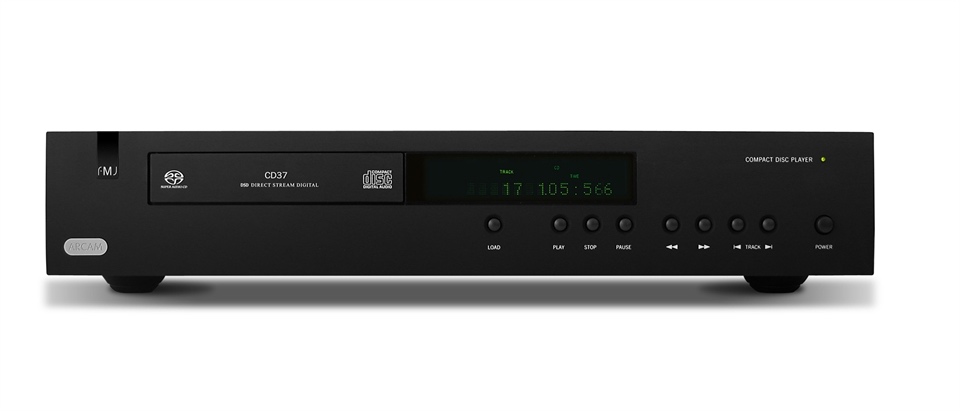
My interest in digital playback starts with the recording and its mastering. A higher-resolution release offers a different delivery format, but somebody still chooses the source, equalisation and level. Those decisions can outweigh the format distinction. Using CDs for both albums keeps the discussion consistent and avoids crediting a player with differences introduced by another edition. The CD37’s SACD capability remains part of its appeal, especially for a collection that already includes hybrid discs, without being a requirement for enjoying the player every day.
One button that explains the machine
The original CR90 remote includes a button marked SUBT, an unusual label on an audio player. On a hybrid SACD it selects the disc layer, after which the player reloads. That arrangement reflects the CD37’s relationship with Arcam’s DV139 platform. It is worth understanding when buying a used machine, because a missing remote can be more than an inconvenience. For ordinary CD playback, the daily routine is much simpler: load the disc, choose a track and use the same analogue path throughout the session.
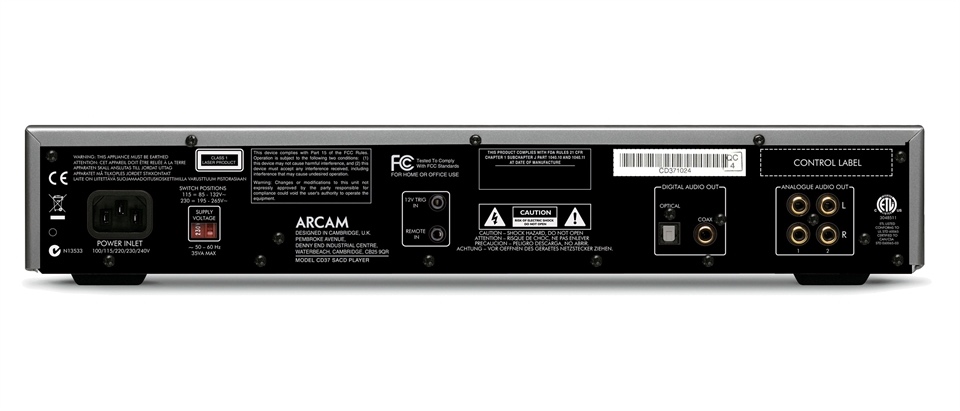
The connections explain the CD37’s role more clearly. SACD playback reaches the system through the stereo analogue outputs. Coaxial and optical digital outputs carry CD audio, so an external converter can also be used with conventional discs. That flexibility gives the player a second use as a CD transport. It also means a comparison between its analogue outputs and an external DAC is a comparison of two conversion stages, with output level and the rest of the signal path to consider.
Two pairs of RCA analogue outputs are provided, and both carry stereo. They do not turn the CD37 into a multichannel SACD player. The intended system has two loudspeakers and an analogue input on an amplifier or preamplifier. For that listener, the arrangement is convenient and familiar. There is no need to navigate a surround processor merely to play a record, and no screen demanding attention once the disc is under way. The appeal is a dedicated component with a clearly defined job.
Two CDs, two different musical conversations
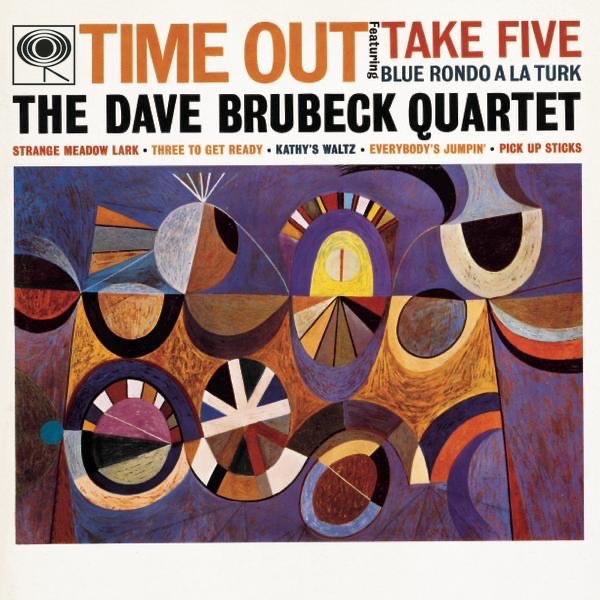
Album: Time Out
Artist: The Dave Brubeck Quartet
Track: “Take Five”
Source: CD
Format: Stereo PCM · 16-bit / 44.1 kHz
“Take Five” on the Dave Brubeck Quartet’s Time Out offers several lines to follow within a wonderfully recognisable performance. Paul Desmond’s alto carries the melody while Eugene Wright’s bass maintains the pulse and Joe Morello’s drums move the emphasis around it. The CD format is entirely capable of carrying the attack, texture and space that make the quartet engaging. What interests me is how naturally attention can move between those players without the tune losing its shape. A clear cymbal strike is a detail; the relationship between the instruments is the music.
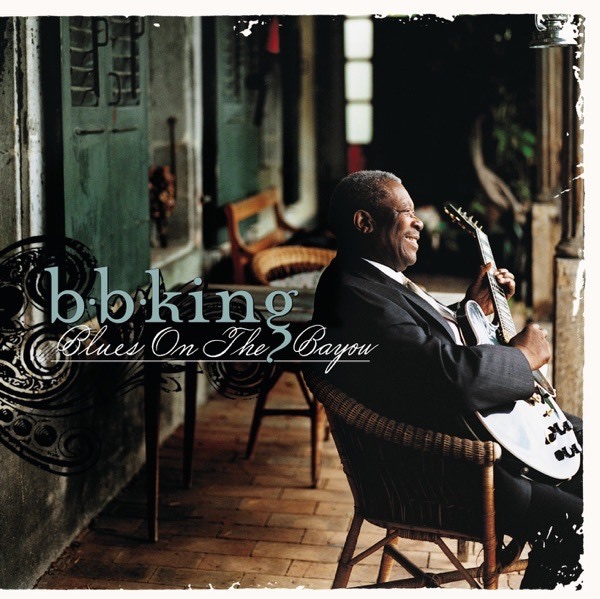
Album: Blues on the Bayou
Artist: B.B. King
Track: “Blues Boys Tune”
Source: CD
Format: Stereo PCM · 16-bit / 44.1 kHz
B.B. King’s Blues on the Bayou gives the guitar a different kind of room. The opening instrumental, “Blues Boys Tune”, is built from short phrases, sustained bends and the spaces before King comes back in. The band keeps the performance moving while the guitar hangs in the air. This is the other side of the CD37’s task: preserving continuity through a quieter passage, as well as keeping several players intelligible at once. Attack matters, but so does the way a note settles and hands the rhythm back to the accompaniment.
What to check on a used player
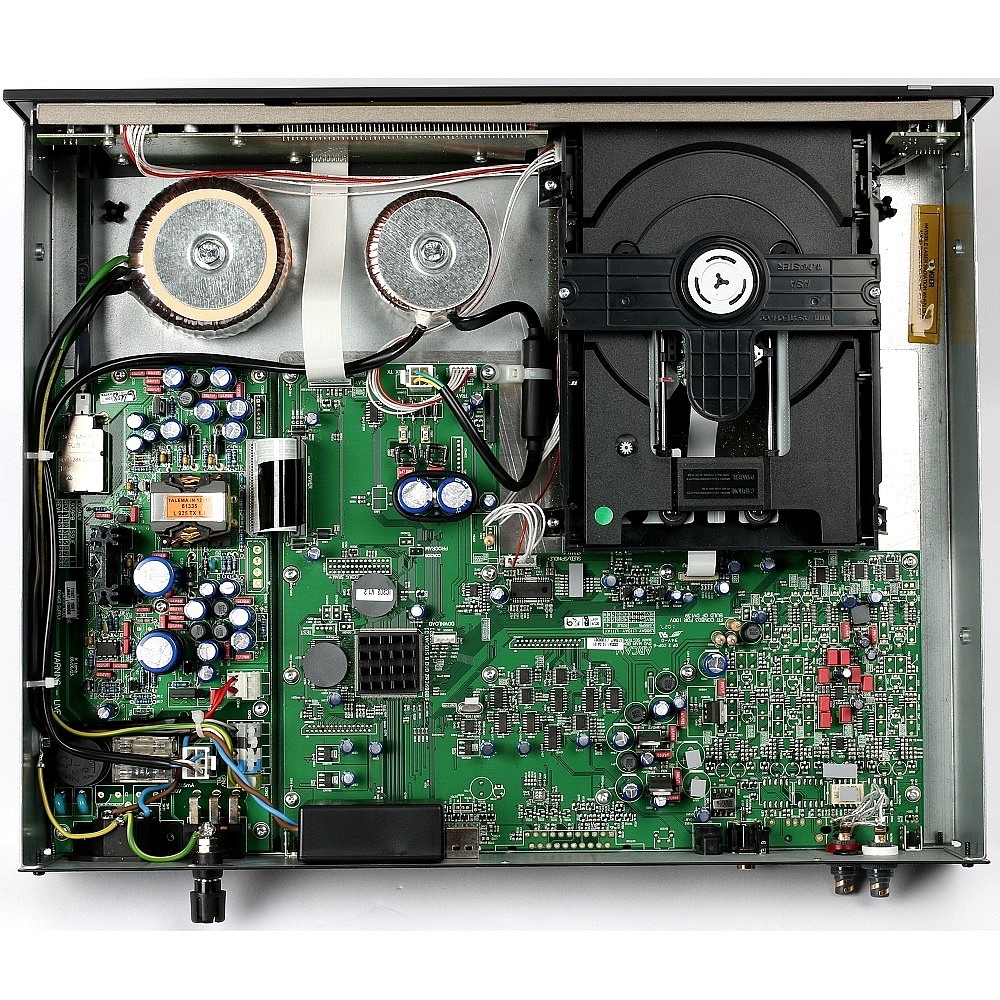
Inside, Wolfson converters handle PCM and DSD, with separate power-supply sections serving the player’s circuitry. The internal view makes the division between the transport, supplies and audio electronics clear. That is useful engineering context, although a component list cannot tell the whole story of a player’s performance. With a machine of this age, the state of the mechanism deserves as much attention as the original design. A reliable drawer and consistent reading of discs are essential to the pleasure of owning it.
A sensible inspection starts with a known-good CD loaded from cold, followed by track changes and a restart. SACD operation should be checked separately if it will be used. Allow for the time the player needs to recognise a disc, but investigate repeated failures rather than treating them as character. Check both analogue channels and the digital output intended for use. The remote, display and front-panel controls are part of that examination too. Those practical details determine whether an older specialist player remains an easy companion to a record collection.
For me, the CD37’s case rests on the collection it serves. It combines familiar CD operation, a dedicated stereo analogue stage and the option of exploring SACD, without forcing a change to the rest of an analogue system. The two CDs here keep that proposition grounded in music people can return to for years. A well-maintained example makes sense when its connections and formats match the shelf. The reason to keep it should be the wish to play another album, rather than the satisfaction of having used every feature on the remote.
Specifications
Arcam’s published specifications for the FMJ CD37. Handbook values are typical unless otherwise stated.
| Specification | Details |
|---|---|
| Type | Stereo CD/SACD player |
| DAC | Wolfson WM8741 converters in dual-differential configuration; native DSD conversion |
| Analogue outputs | Two pairs of RCA stereo outputs |
| Digital outputs | Coaxial S/PDIF and optical TOSLINK; CD audio only |
| Output level | 2.3 V RMS at 0 dB |
| Output impedance | 47 Ω; minimum recommended load 5 kΩ |
| Published frequency response | 0.3 Hz–20 kHz, ±0.5 dB |
| Control | CR90 remote; infrared input and 12 V trigger input |
| Dimensions (W × H × D) | 430 × 85 × 355 mm |
| Weight | 6.2 kg net |
| Maximum power consumption | 32 VA |