
Nardis gives me plenty to follow on Explorations. Scott LaFaro has his own ideas on bass, Bill Evans is working through the melody and harmony, and Paul Motian keeps them company without crowding either. On this XRCD, I can follow the individual parts even as the playing grows more complex. The space between the instruments makes a real difference.
This is the 1998 Japanese Riverside edition, VICJ-60140, with XRCD mastering credited to Alan Yoshida. What impresses me is its warmth and depth. The soundstage extends well beyond a flat line of instruments, and the separation feels natural. I don’t have to work at hearing what LaFaro is doing beneath the piano. His contribution is there to enjoy.
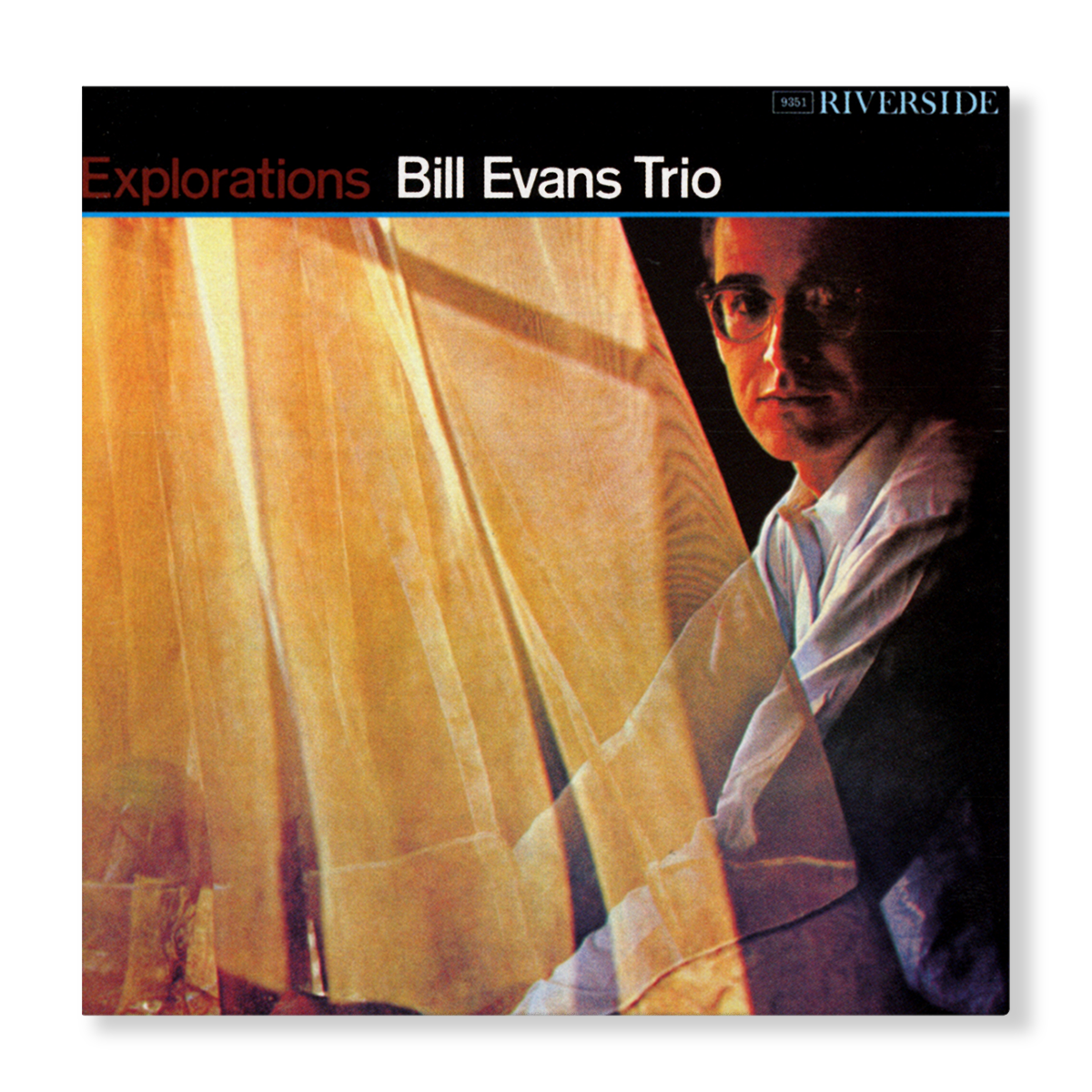
By February 1961, this trio had spent a year playing together since recording Portrait in Jazz. Evans wanted more freedom for all three musicians, with the bass and drums able to contribute ideas instead of waiting for their turn behind a piano solo. That freedom needed judgement. Sometimes the useful thing to play was something simple.
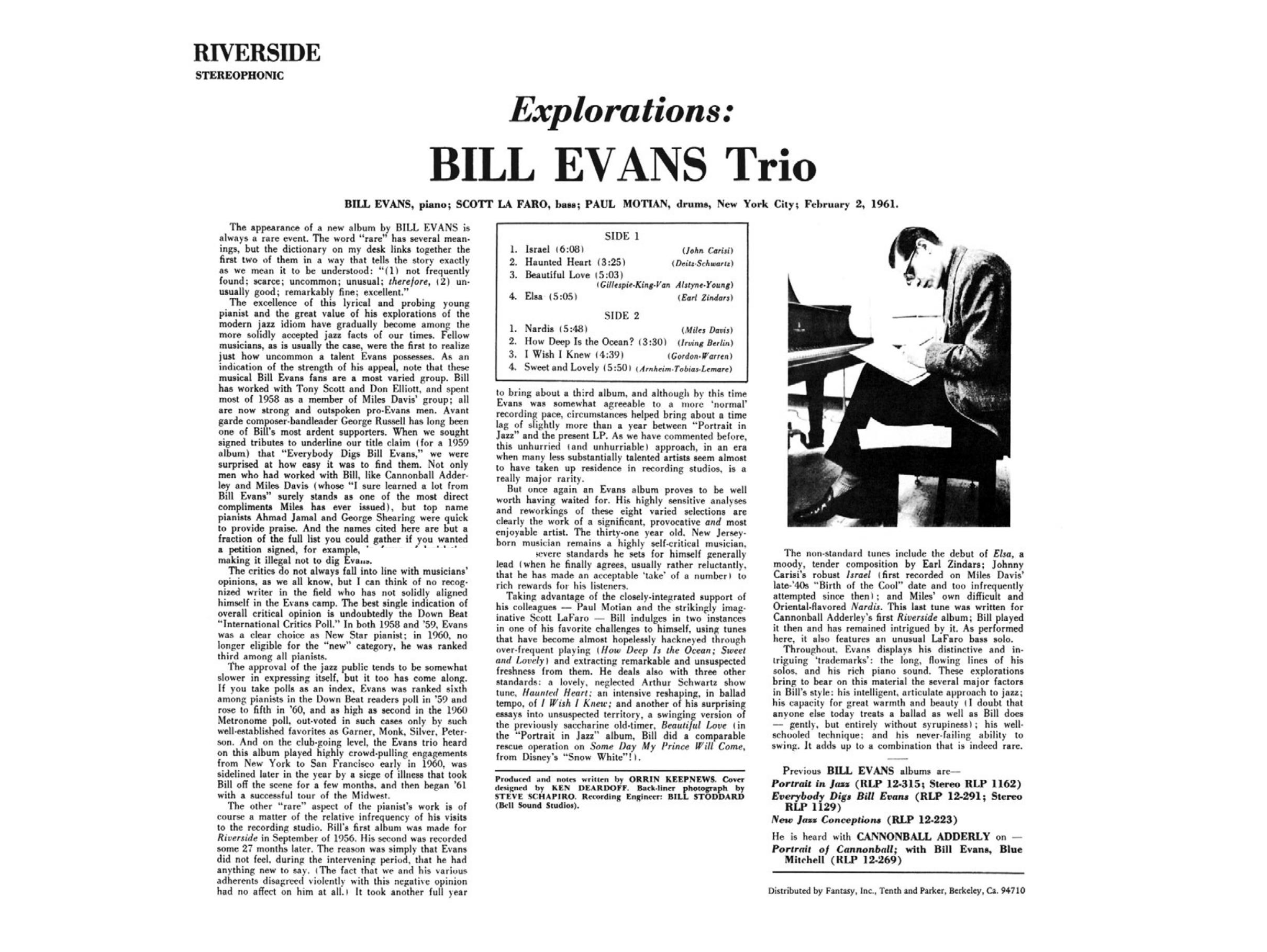
The booklet puts a less comfortable human face on the session. Evans had a headache, and there was tension between him and LaFaro. They went into Bell Sound Studios in New York on 2 February and recorded the album with producer Orrin Keepnews and engineer Bill Stoddard. It wasn’t an idyllic day for everybody involved. Knowing that makes the ease with which I can follow their playing all the more interesting.
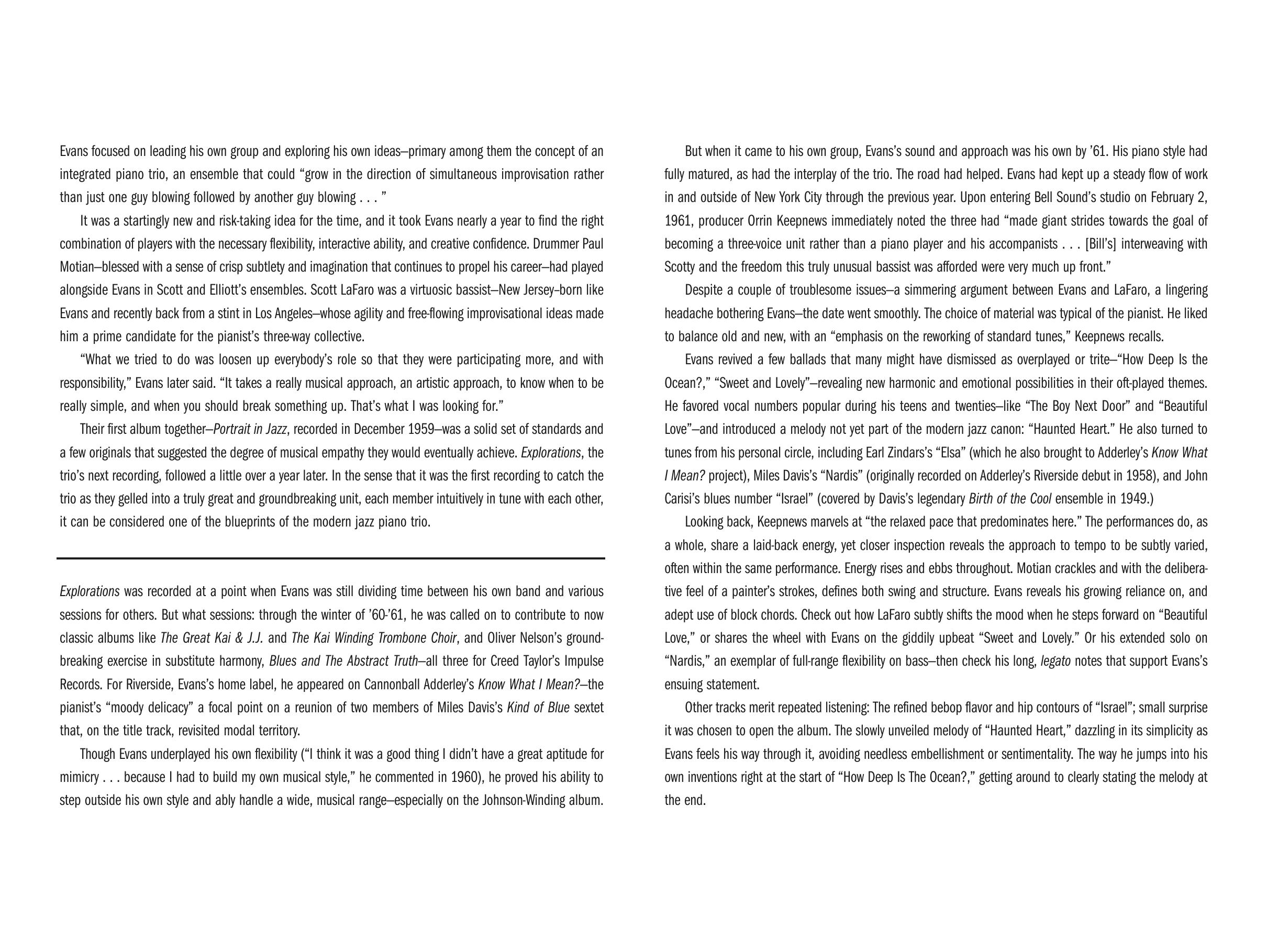
Israel is where Evans particularly gets to me. His touch is delicate, his solo sensitive and emotional, yet there’s nothing timid about the musicianship. John Carisi’s tune had already been recorded by Miles Davis’s Birth of the Cool group in 1949. Here, Evans gives me plenty to admire in the playing, but it’s the feeling in his phrasing that holds my attention.
LaFaro deserves as much attention. I love the combination of a strong groove and those fluid, melodic bass lines. He can build tension and let it go without losing the sense of movement. On Nardis, being able to follow the separate parts makes the relationship between bass and piano easier to appreciate. Evans had played on the first recording of this Miles Davis composition with Cannonball Adderley in 1958; it was already part of his musical life before this date.
Motian is quieter about his contribution. His drumming is subtle and understated, but it gives the other two a firm foundation. The cymbal decay particularly impresses me. It belongs with the warmth and naturalness I hear across this disc, rather than drawing attention away from the playing. There’s a wide range between the softer and stronger passages too, which helps the trio sound lifelike.
The original liner notes describe a pianist reluctant to record until he felt he had something to say. Keepnews had sometimes found that frustrating. Looking at how little studio work this particular trio left behind, it’s tempting to wish Evans had been less demanding of himself. Explorations was their last studio album together; the Village Vanguard recordings followed in June, and LaFaro died in July.
There is no shortage of activity to hear here, however understated the playing might seem at first. Give LaFaro some of the attention you’d normally reserve for Evans. His bass lines are a large part of why this music keeps moving.