
Chuck Israels had a difficult chair to fill. Scott LaFaro died just ten days after the June 1961 Village Vanguard recordings, and Bill Evans eventually rebuilt his trio with Israels on bass and Paul Motian back on drums. Moon Beams came from their studio sessions in May and June 1962. Eight ballads, a new bassist, and a pianist whose delicate touch is particularly well suited to this material.
The first thing that struck me was the space. The soundstage is wide and deep, with each instrument occupying its own distinct place. That makes it easy to pick out individual parts, even when the playing becomes more complex. I can follow Israels without losing track of Evans. There’s a natural separation between them, and the warmth of the sound hasn’t swallowed the detail.
Evans’ solos impressed me enormously. There’s technical brilliance in his playing, but his sensitivity gives those beautiful melodies and harmonies their emotional pull. On a programme built around ballads, a delicate touch matters. There’s time to hear it. The piano has plenty to say without the music having to hurry towards the next solo.
Israels brings a strong groove and a fluid, melodic approach. I particularly like the tension and release in his playing. It gives me something to follow beyond the piano line, and the recording makes that easy. Motian’s understated drumming leaves room for both of them. He provides a solid foundation without making the rhythm section feel heavy. This is still a trio, however much attention Evans’ name attracts.
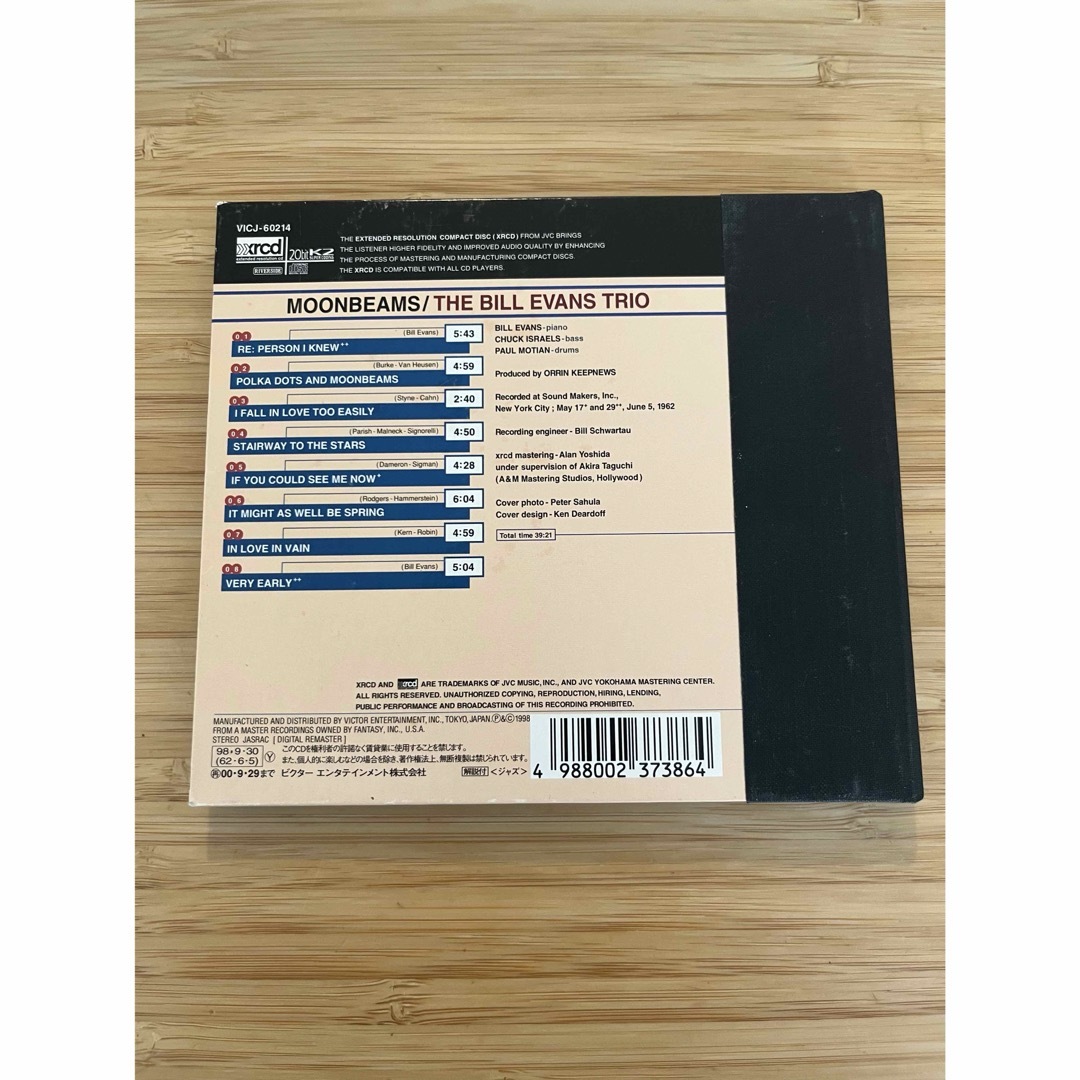
The sessions themselves weren’t an uninterrupted run of slow tunes. Producer Orrin Keepnews worried that recording eight ballads in succession might drain the musicians’ energy, so material for Moon Beams was interspersed with the livelier programme that became How My Heart Sings! They recorded over three days at Sound Makers in New York, with Bill Schwartau engineering. Two albums came out of those dates, each with its own character.
Evans’ compositions Re: Person I Knew and Very Early sit at either end of Moon Beams. Between them are standards including Polka Dots and Moonbeams and I Fall in Love Too Easily. The ballad programme gives the album its consistency, while the playing keeps plenty happening within it. Slow music needn’t leave the bass and drums with little to do.
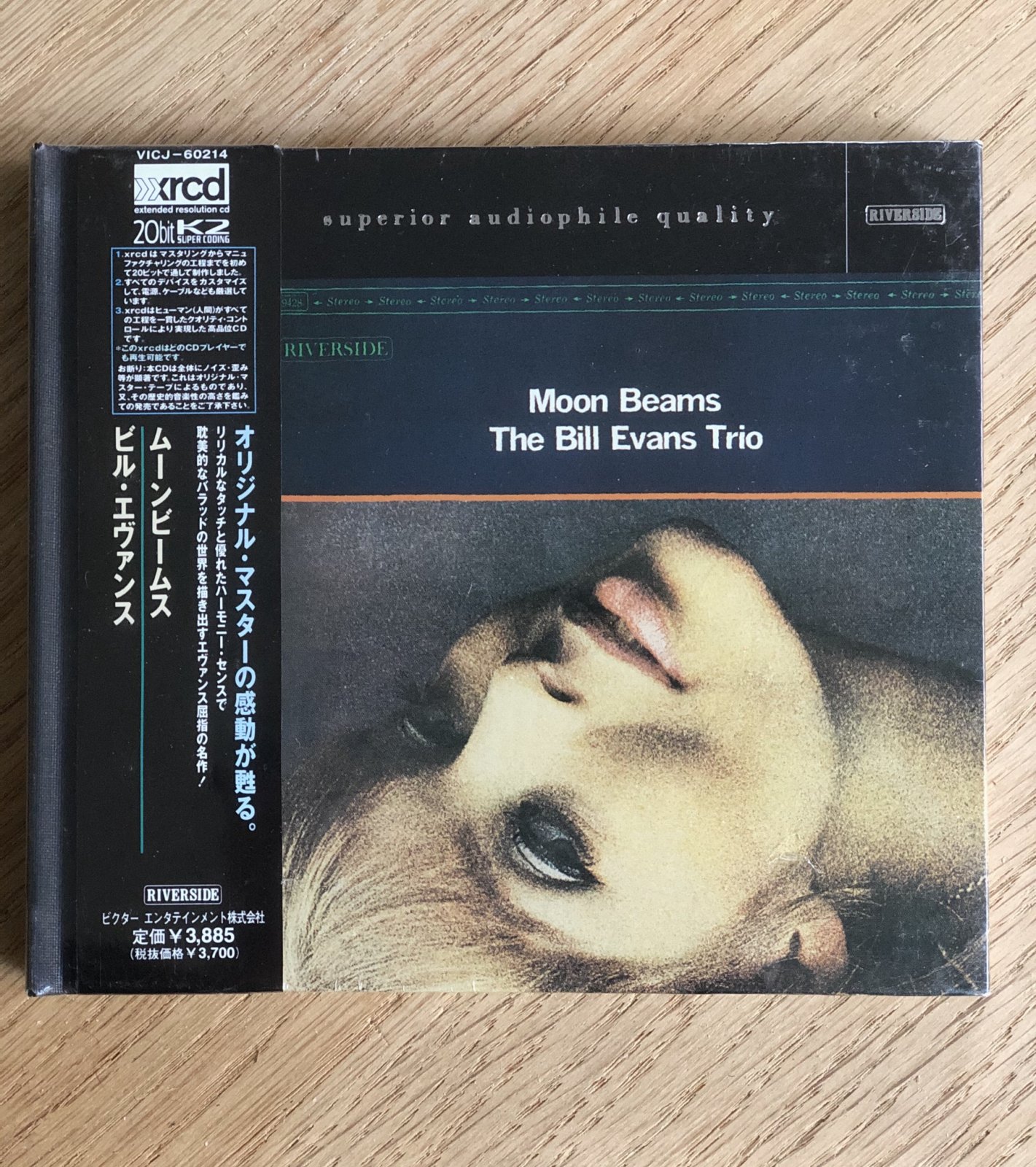
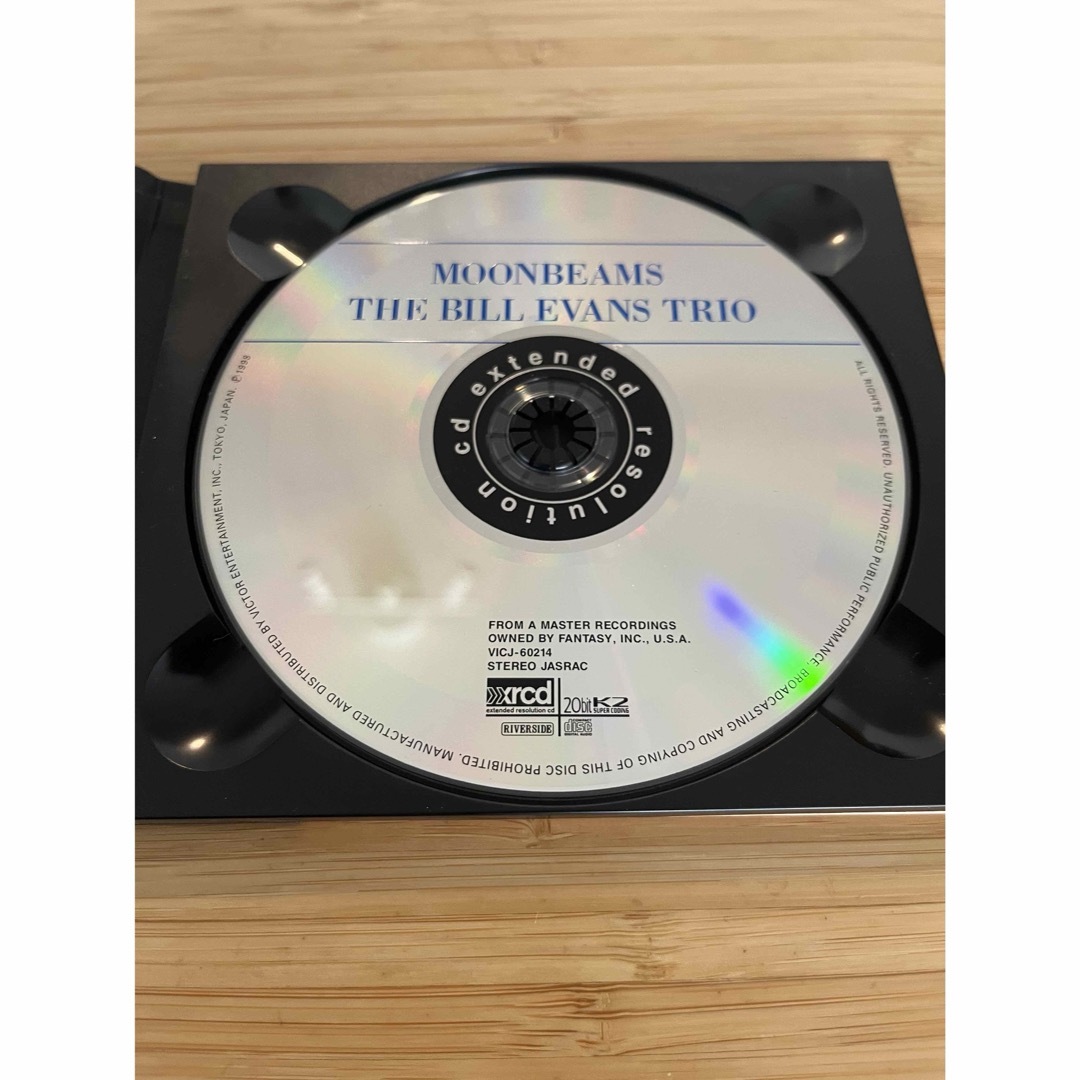
My copy is the 1998 Japanese Riverside/Victor XRCD, VICJ-60214. Alan Yoshida handled the XRCD mastering at A&M Mastering Studios in Hollywood, under Akira Taguchi’s supervision. Despite the lettering on the package, it plays in an ordinary CD player. The edition details are useful when finding a copy, because Moon Beams has appeared in numerous releases over the years.
What I hear from this one is warm, natural sound with wide dynamics. The depth and detail make the reproduction feel lifelike, and the piano’s delicacy survives alongside the bass. That combination is a big part of why I enjoyed the recording.
And then there are Motian’s cymbals. Their decay particularly impressed me. For all the attention given to the piano, there’s a lot to hear in that fading sound.