
CH Precision
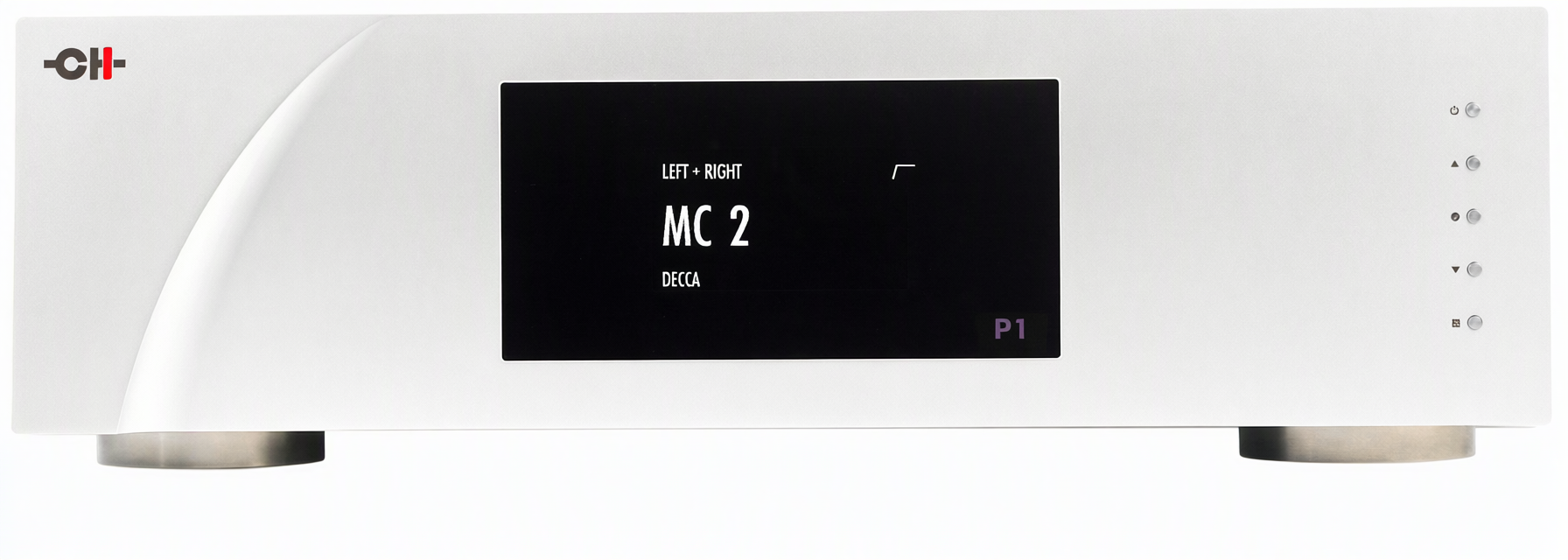
P1 with X1 PSU.
Three cartridge inputs, two sensing topologies and a separate regulated supply make CH Precision’s P1 and X1 a modular approach to phono amplification.
A second chassis is an unusually substantial addition to a phono stage. With the CH Precision P1 and X1, the division has a specific purpose: the P1 handles cartridge amplification and equalisation, while the X1 adds an external regulated linear power supply. CH describes the arrangement as a way to reduce electrical noise around circuitry working with very small signals.
The Swiss-made P1 already has a fully discrete, dual-mono architecture. Adding the X1 is an expansion of that platform, rather than a requirement for the P1 to function. The external supply works alongside regulation within the connected component. This is a modular approach to building the system, with cartridge matching and power provision treated as separate decisions.
Two ways to read a cartridge
Two P1 inputs use current sensing for low-output, low-impedance moving-coil cartridges. CH specifies this topology for that particular cartridge group and dispenses with the conventional load-impedance setting on those inputs. The third input uses voltage sensing and supports moving-magnet as well as moving-coil cartridges, with gain and loading available for adjustment.
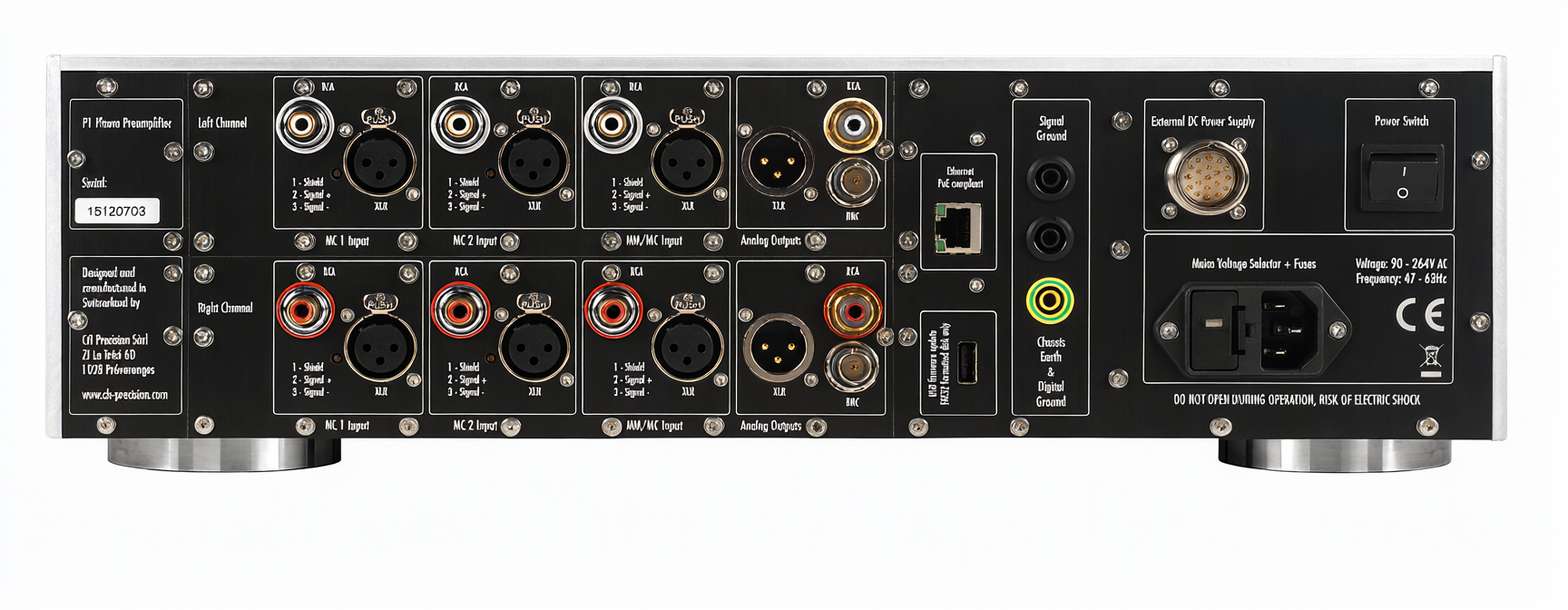
That distinction gives the three inputs different roles. A system with several tonearms need not apply the same input arrangement to every cartridge. RCA and XLR connections are provided for each input, while the voltage-sensing input offers loading from 20 ohms to 100 kilohms. The appropriate route depends on the cartridge, rather than simply choosing the highest available gain.
Gain with its conditions attached
For the voltage input, the published single-ended gain range is 35 to 70 dB, with balanced operation adding 6 dB. The current inputs carry a different specification: 44 to 69 dB with a 10-ohm cartridge. The cartridge condition matters because the current-input figure does not describe the same operating arrangement as the voltage-input figure.
Standard playback equalisation is RIAA. Optional historical curves extend the P1 to records requiring other equalisation characteristics, including EMI, Columbia, Decca and Teldec. These are an option rather than a standard feature of every unit. CH also provides its control application and setup assistance for configuration, making the settings part of the product’s operation beyond the front-panel input selection.
What the X1 changes
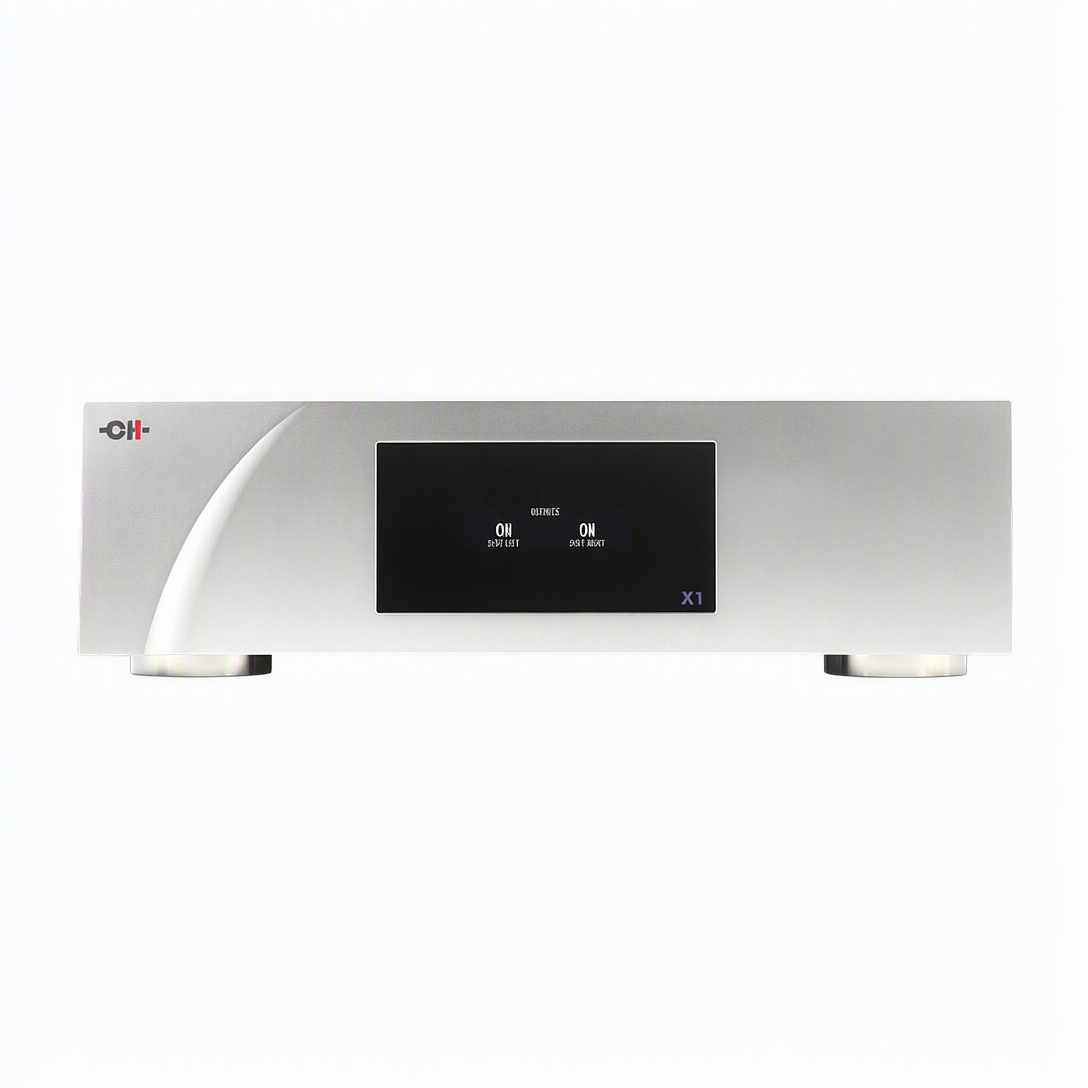
The X1 supplies regulated DC from a separate enclosure. CH attributes reduced noise and interference around the audio circuitry to this separation and its additional regulation. Those are the manufacturer’s design claims. The relevant physical change is clear: power-supply circuitry occupies its own box, connected to a P1 that retains its local regulation.
An optional second output board allows one X1 to serve two compatible CH components. It is not standard dual-component capability on every X1. The broader modular arrangement can also extend to a second P1 and a second supply, although the pairing here is one phono stage with one external supply. Each additional chassis changes the system configuration rather than the cartridge itself.
Two components, distinct jobs
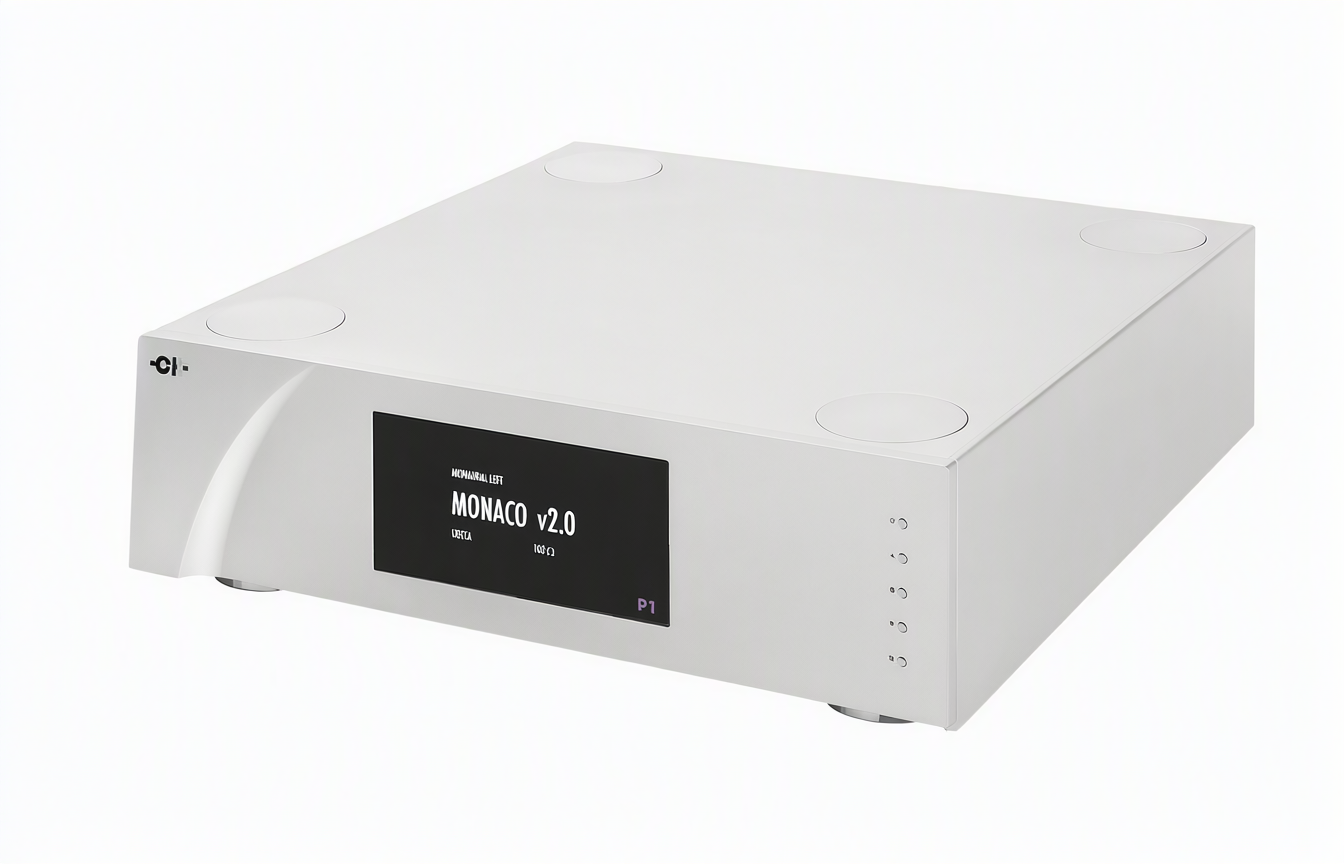
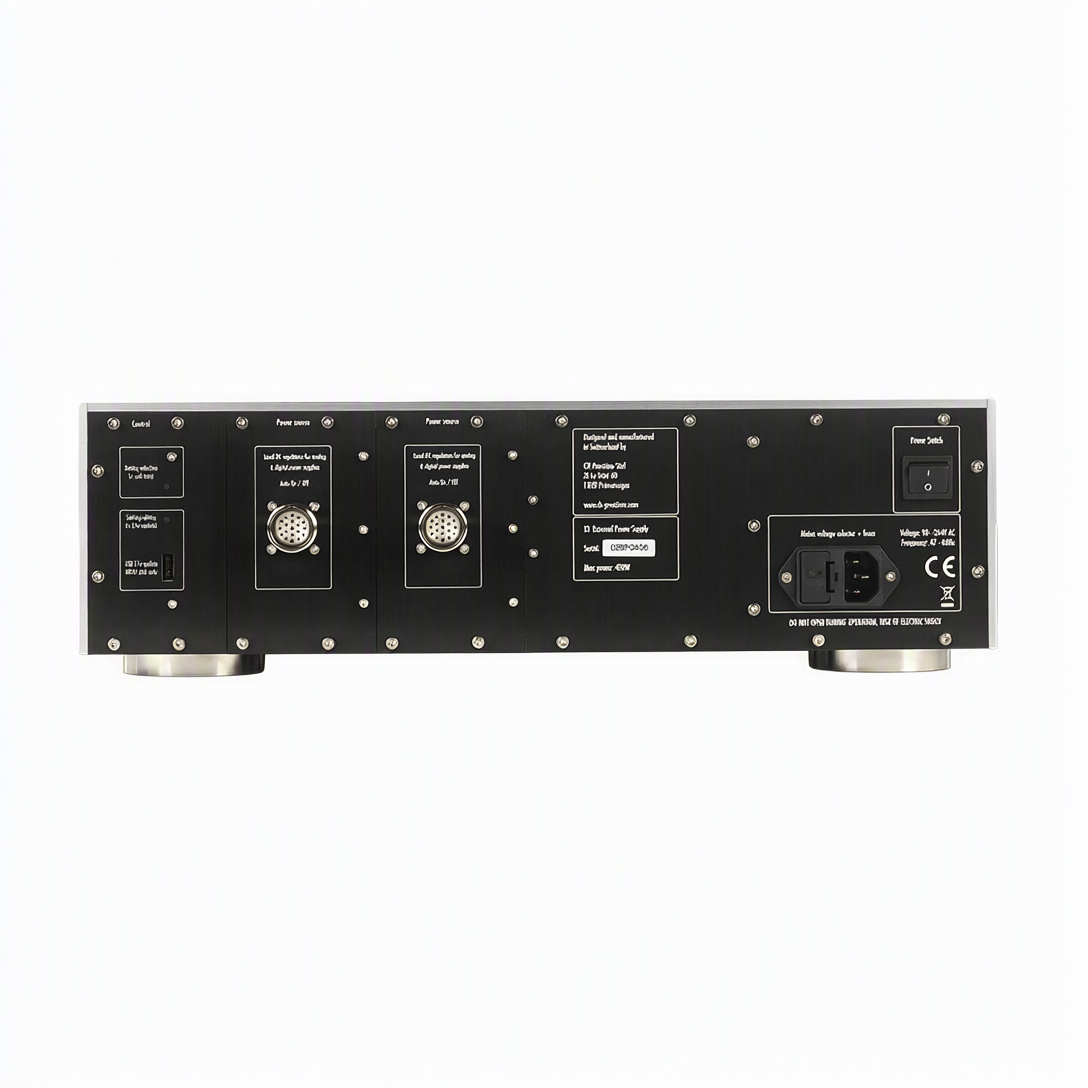
The P1 provides XLR, RCA and BNC analogue outputs. Its case and the X1 share the same footprint and height, while their weights differ: 20 kg for the phono stage and 22 kg for the power supply. Those are individual component figures. The rear connections and internal photographs show why the two enclosures should be understood as separate working parts of the same arrangement.
What distinguishes this pairing is the combination of cartridge-specific input topologies and an expandable power system. Current-sensing moving-coil inputs, an adjustable voltage input and optional historical equalisation address the record and cartridge side. The X1 addresses power provision. Together they describe CH’s modular phono platform without requiring every cartridge or every system to follow the same configuration.
Specifications
| Specification | Details |
|---|---|
| Cartridge compatibility | 2 current-sensing inputs for low-output, low-impedance MC; 1 voltage-sensing input for MM/MC |
| Gain | Voltage input: 35–70 dB single-ended; balanced adds 6 dB. Current input: 44–69 dB with 10-ohm cartridge. |
| Loading | Voltage input: 20 ohms–100 kohms; current inputs require no conventional loading adjustment |
| Inputs | RCA and XLR for each of the 3 cartridge inputs |
| Outputs | XLR, RCA and BNC |
| Equalisation | RIAA standard; historical curves optional |
| Dimensions (H × W × D) | 133 × 440 × 440 mm per component |
| Weight | P1: 20 kg; X1: 22 kg |
| External power supply | X1 regulated linear DC supply; second output board optional |