
With the Classé CA-M400, four hundred watts buys one channel. A stereo system requires two complete amplifiers before a source or a volume control enters the picture. Why would I make room for that at home, where a great deal of the music I play calls for a perfectly civilised listening level? With the B&W 800Ds, the answer had more to do with being able to follow a recording than it did with seeing how loudly the system would go.
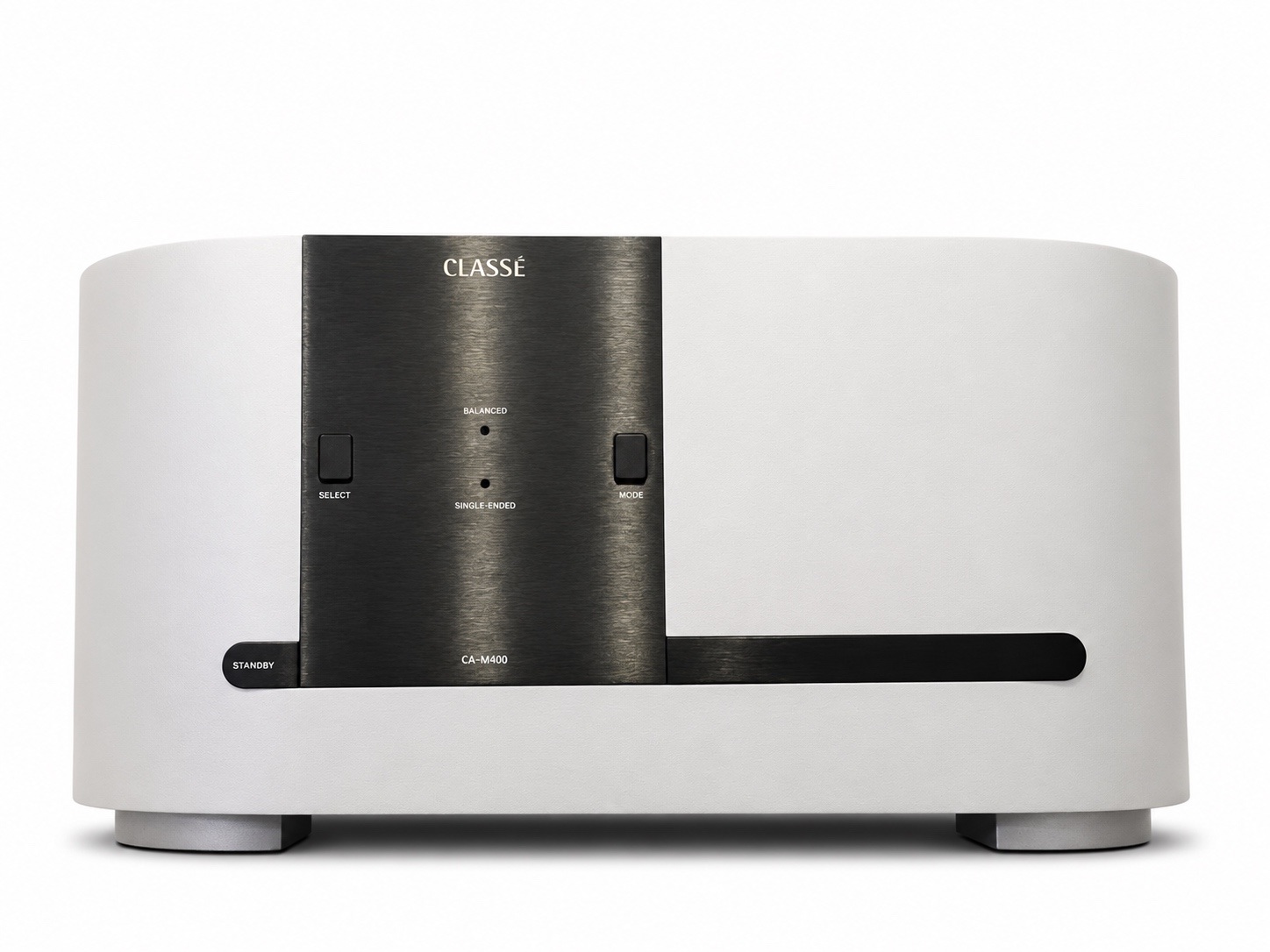
A pair of Classé CA-M400s takes up a fair amount of rack space before you count the rest of the system. Each box handles a single channel. Mine worked with B&W 800D speakers, a Classé CP-700 preamplifier and the CDP-202 CD player. The monoblocks gave that system the authoritative control I wanted from a power amplifier.
The advantage I heard through the 800Ds
The sound has a smoothness through the middle and top that sits comfortably with the sense of control. Detail doesn’t arrive with an aggressive edge, and the stage has both breadth and focus. There’s a calmer quality here than the sheer size of the boxes might suggest. A powerful amplifier needn’t keep announcing its strength to make a record enjoyable.
That character has a softer side through the midrange. Anyone after a very sharply outlined presentation should spend time with the balance before deciding. Smoothness can be attractive without being everybody’s preference. The control, soundstage and detail are what I enjoyed in my system; the useful question for another listener is how those qualities fit their speakers and the records they play.
One useful distinction is between what happens on the loudest accent and what happens immediately afterwards. A pair of speakers can deliver the accent with terrific authority. The next few notes may be quite small, though, and the player put them there for a reason. Those are the moments I’d use to judge a prospective amplifier for the 800Ds. If I find myself turning it up to recover the little notes and back down again when the band leans in, the combination is going to wear thin over an evening.
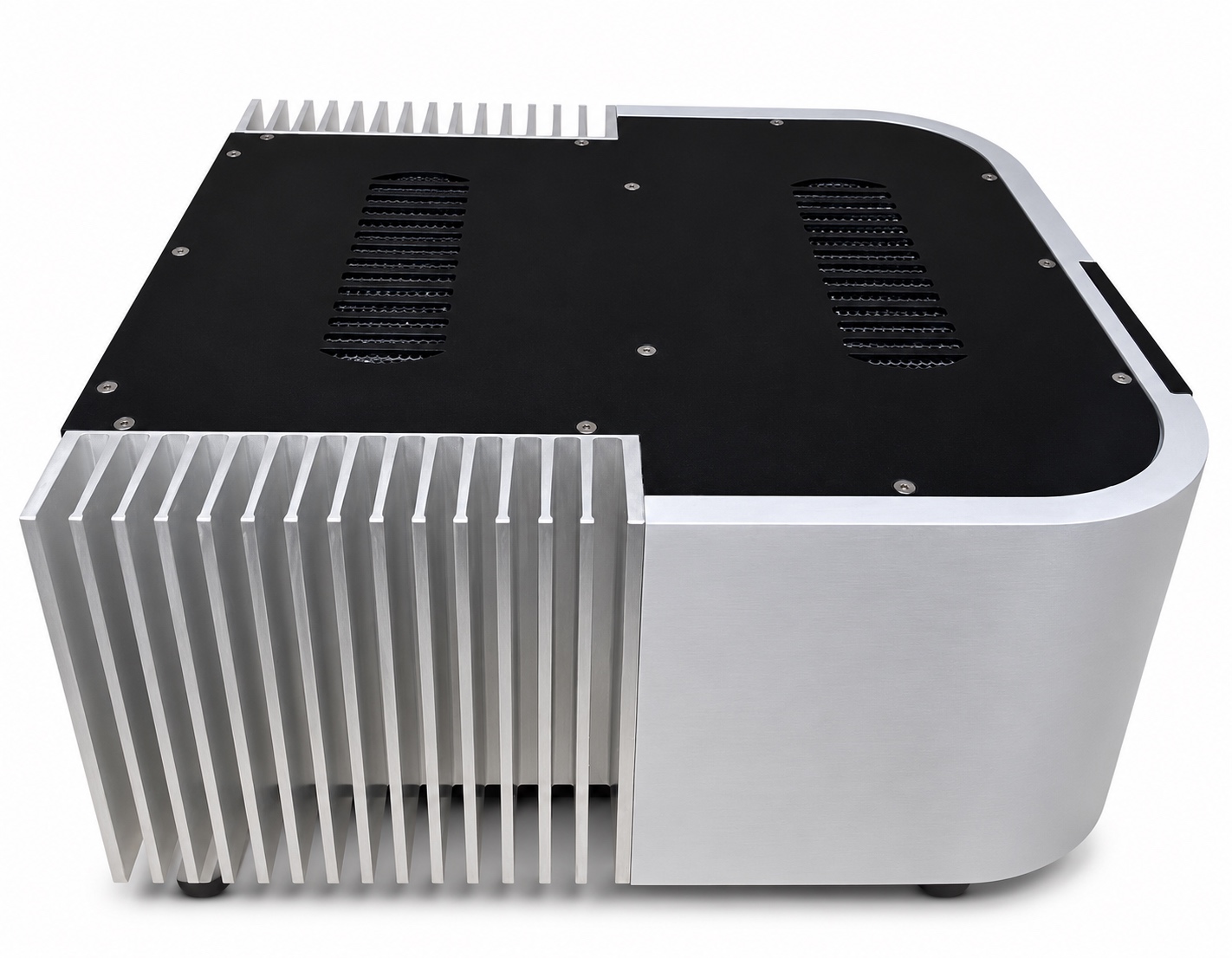
Classé calls this model the CA-M400. It belongs to the first Delta generation, with the curved front and substantial casework that make the range recognisable. The inside is interesting too: amplifier modules work in a balanced output arrangement within each monoblock. For the owner, the result is still a single channel per box, with its own supply and heatsinking.
Saxophone, bass and a very different kind of guitar
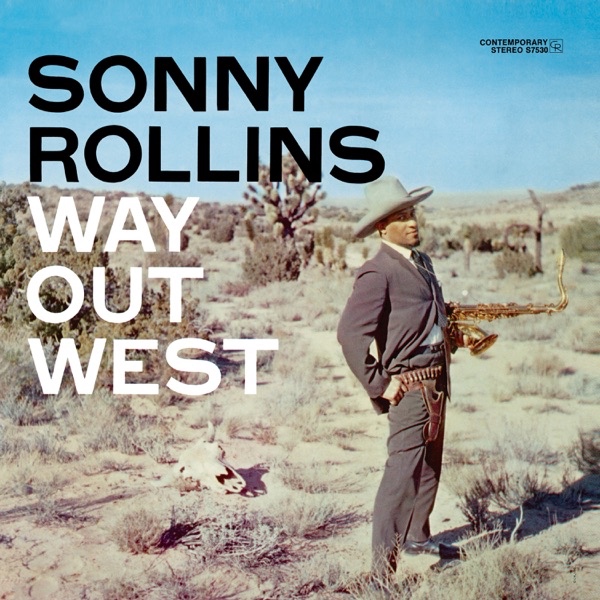
Album: Way Out West
Artist: Sonny Rollins
Track: “Come, Gone”
Source: CD
Format: Stereo PCM · 16-bit / 44.1 kHz
Sonny Rollins’s Way Out West puts tenor saxophone with Ray Brown’s bass and Shelly Manne’s drums, without a piano filling the middle. On “Come, Gone”, each player has space, yet the performance depends on their interaction. Brown’s line supplies movement as well as weight, while Manne’s accents keep the rhythm alert beneath Rollins. The recording brings the distinction between power and control into focus. In the Classé and 800D system, the qualities I valued were the firm foundation, broad stage and smooth presentation; a sparse trio gives those priorities a musical purpose.
“Come, Gone” and “Solitude” are two selections to try. Follow Brown’s notes as well as their weight, then give Manne’s accents some attention while keeping Rollins in the picture. Stay at the level you actually use at home. Give the quieter passages as much time as the louder ones; a big amplifier still has to hold your interest when it isn’t working hard.

Album: Born Under a Bad Sign
Artist: Albert King
Track: “Born Under a Bad Sign”
Source: CD
Format: Stereo PCM · 16-bit / 44.1 kHz
Albert King’s “Born Under a Bad Sign” sets a repeating bass figure under a guitar that pulls against it. The sustained bends draw the ear, but the figure underneath is what keeps the performance moving. The pleasure lies in hearing both at once: the bite and tension of the guitar, and the shape of the rhythm beneath it. Through a speaker as substantial as the 800D, extra weight alone would be a poor substitute for that clarity. The CA-M400’s authority made sense to me because it was accompanied by focus and a top end that stayed comfortable over an evening.
Living with two power amplifiers
There are practical details to get right before playing a record. The RCA and balanced XLR inputs are selected from the front panel. Each amplifier also has paired speaker terminals for bi-wiring. Both pairs carry the same channel; they don’t give you independent bass and treble controls. That distinction is easily lost among the sockets and cables behind a substantial system.
The heatsinks need room around them. Plan the space between components as well as whether the cases fit onto a shelf, and make sure the support is up to the job. These are heavy amplifiers. They reward a little thought about installation before you start connecting everything, particularly if access to the rear of the rack is awkward.
Putting each amplifier beside its loudspeaker can shorten the speaker leads, but it moves the length elsewhere. Measure the paths back to the preamplifier and check where the mains outlets are before deciding on a layout. The more attractive arrangement in a photograph can be the one that leaves a signal cable crossing the doorway. In an audition I’d also try selecting the input and reading the status on both units from the position in which they will live. You only have to set them up occasionally, but you have to reach them when something changes.
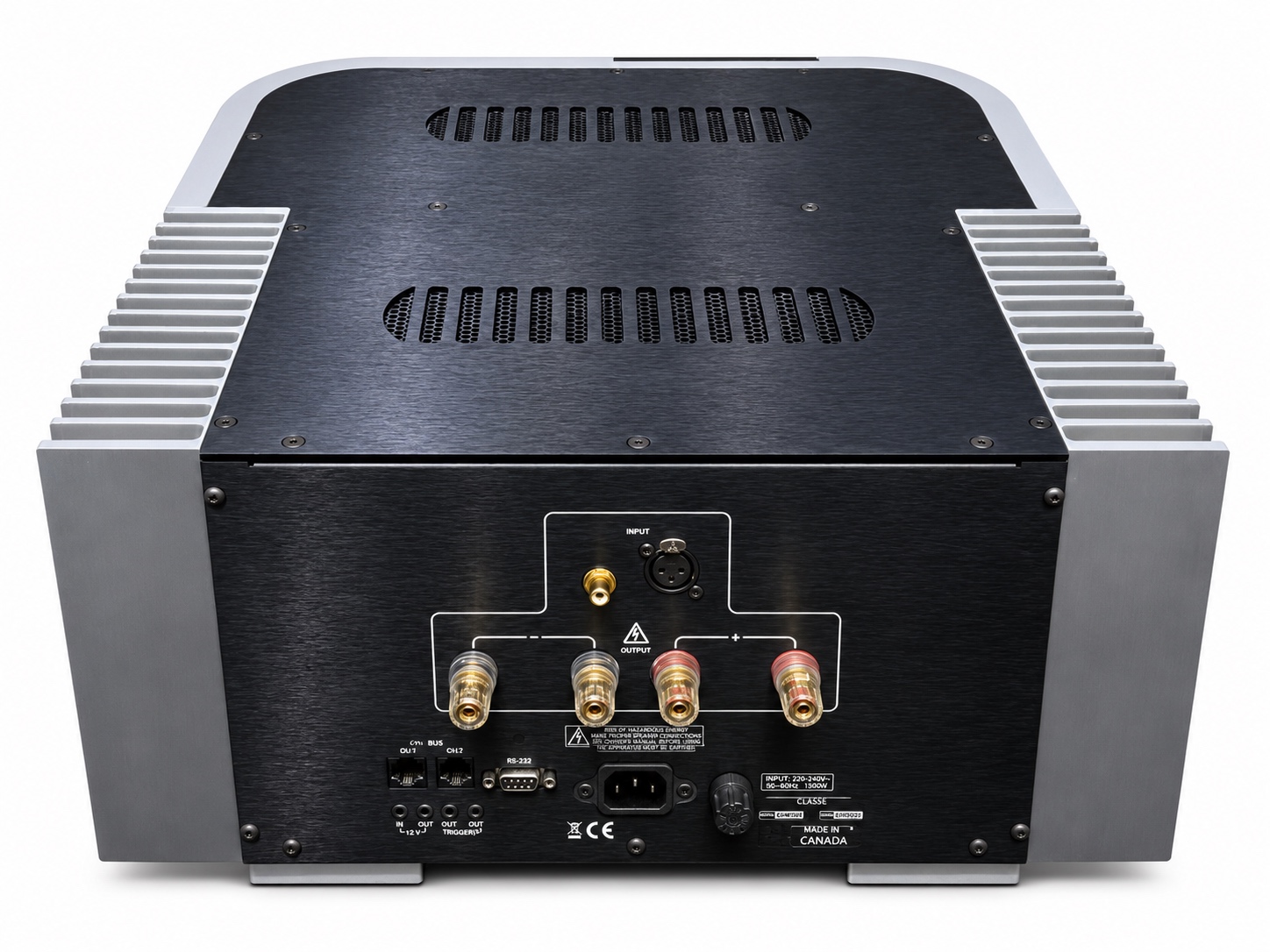
The published rating rises from 400 watts into eight ohms to 800 into four. For an owner considering large floorstanders that is a useful piece of information to have alongside their impedance specification. It still leaves the listening decision to you. My reason for enjoying the CA-M400s was their combination of authority, a broad soundstage and detail that came through without roughening the top end. I could appreciate those things without waiting for a loud passage. That is the part of the investment in two boxes that made sense to me.
Specifications
Manufacturer specifications for the Classé CA-M400; figures are per monoblock.
| Specification | Details |
|---|---|
| Type | Solid-state monoblock power amplifier |
| Rated output — 8 Ω | 400 W continuous RMS |
| Rated output — 4 Ω | 800 W continuous RMS |
| Inputs | Balanced XLR and single-ended RCA; selectable |
| Input impedance | 100 kΩ |
| Speaker connections | Two pairs of binding posts for bi-wiring one channel |
| Frequency response | 10 Hz–22 kHz, +0/−0.1 dB; 10 Hz–155 kHz, +0/−3 dB |
| Dimensions — W × H × D | 445 × 222 × 470 mm, excluding controls and connectors |
| Weight | 37 kg each |