
What does a small loudspeaker give you after the demonstration level comes down? With the Australian-built Lenehan Audio ML1, my answer starts with Emilie-Claire Barlow. Her voice sounded spacious and enveloping through these speakers, and I could turn the level down and still hear a coherent performance. That is a quality I value in a standmount. I spend more time listening at ordinary levels than I do finding out how loudly a small pair can play.
What stays with me is how natural Barlow sounded. A voice can be sharply located between a pair of speakers and still feel rather small or flat. The ML1 gave me both a clear position and a sense of space around her. I could pay attention to the singer without the accompaniment losing its place. That combination is a large part of why I rate the imaging so highly and why I think the ML1 deserves consideration as a reference in a home studio.
A small monitor in a real room
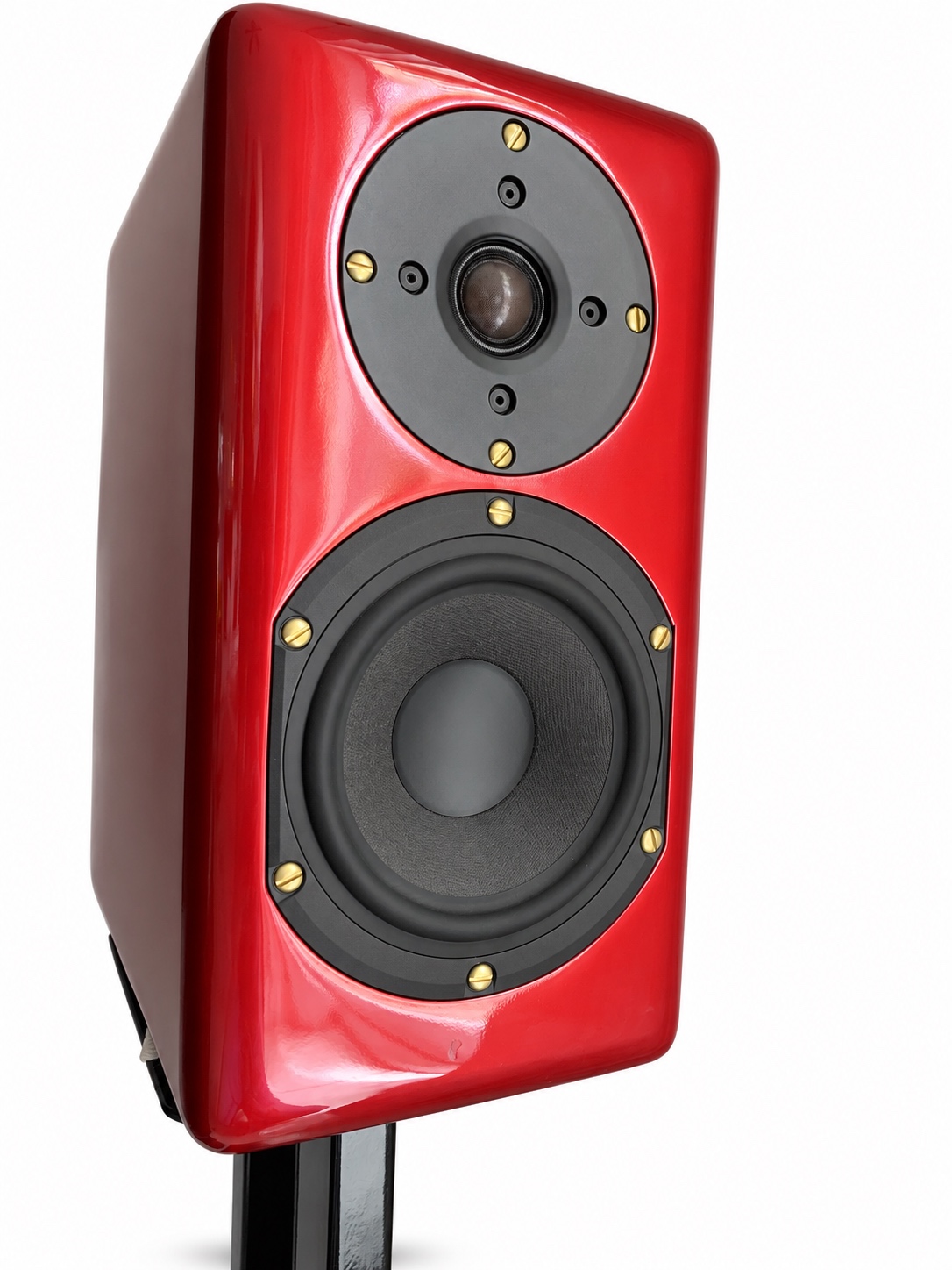
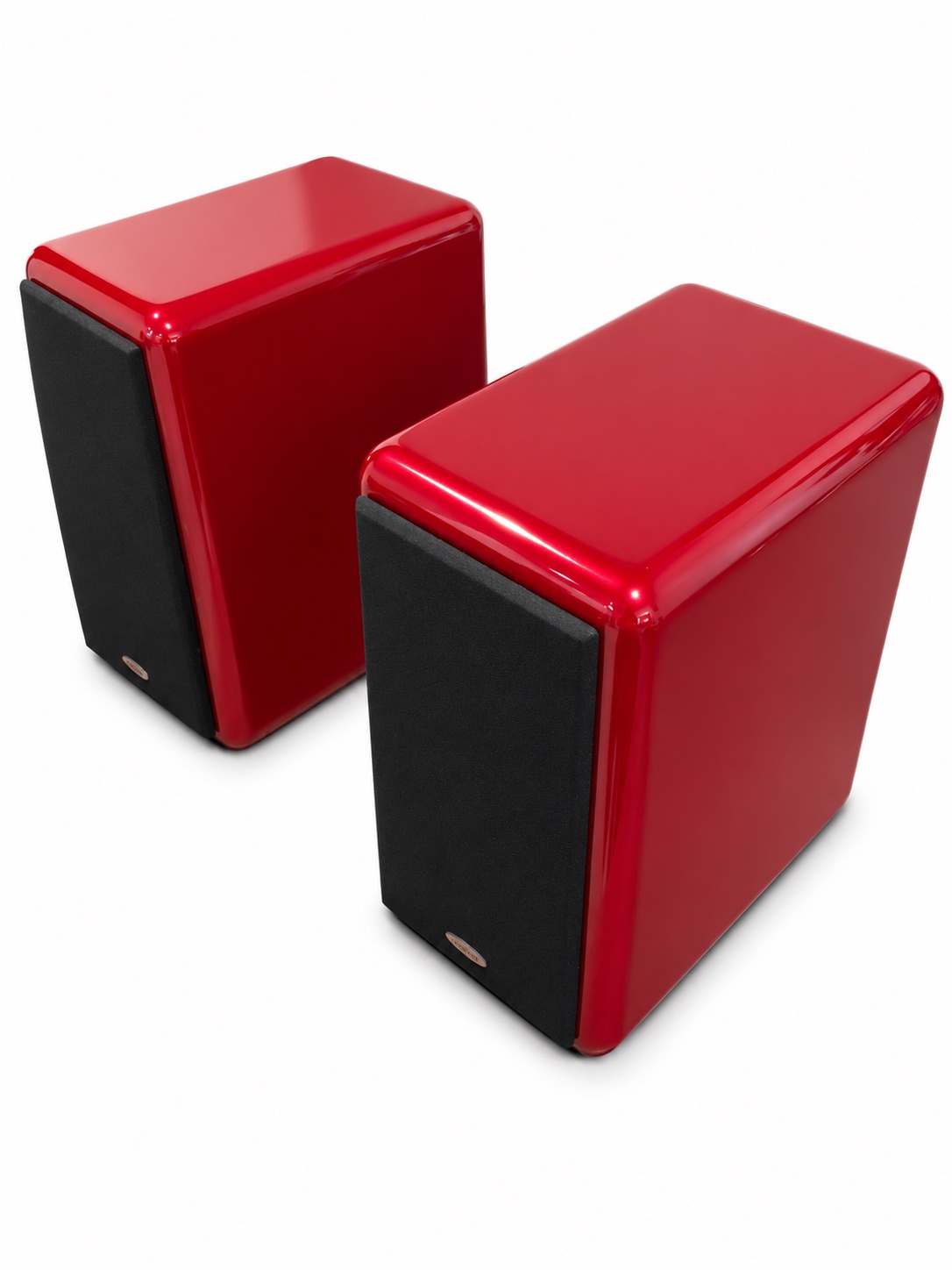
Lenehan’s basic layout is a two-way with a textile dome tweeter, a Nomex mid-bass driver and a rear port. It is a manageable box to put on a stand, which can encourage the assumption that almost any convenient shelf will do. A shelf fixes the speaker’s height, its distance from the back wall and often its distance from a side wall in one decision. A pair of stands lets you vary one of those things at a time. That freedom is valuable even if the final position turns out to be fairly close to where you started.
I’d set up the pair with a single voice before making decisions about extra bass. Sit where you normally listen and move one speaker slightly if the centre image hangs persistently to one side. Check the distances before trying to compensate with the balance control. Once the singer has a convincing position, listen to the bass line through the same passage and move the pair a little further from the wall. Marking the first position makes the experiment reversible. It also makes it much easier to remember which change achieved what.
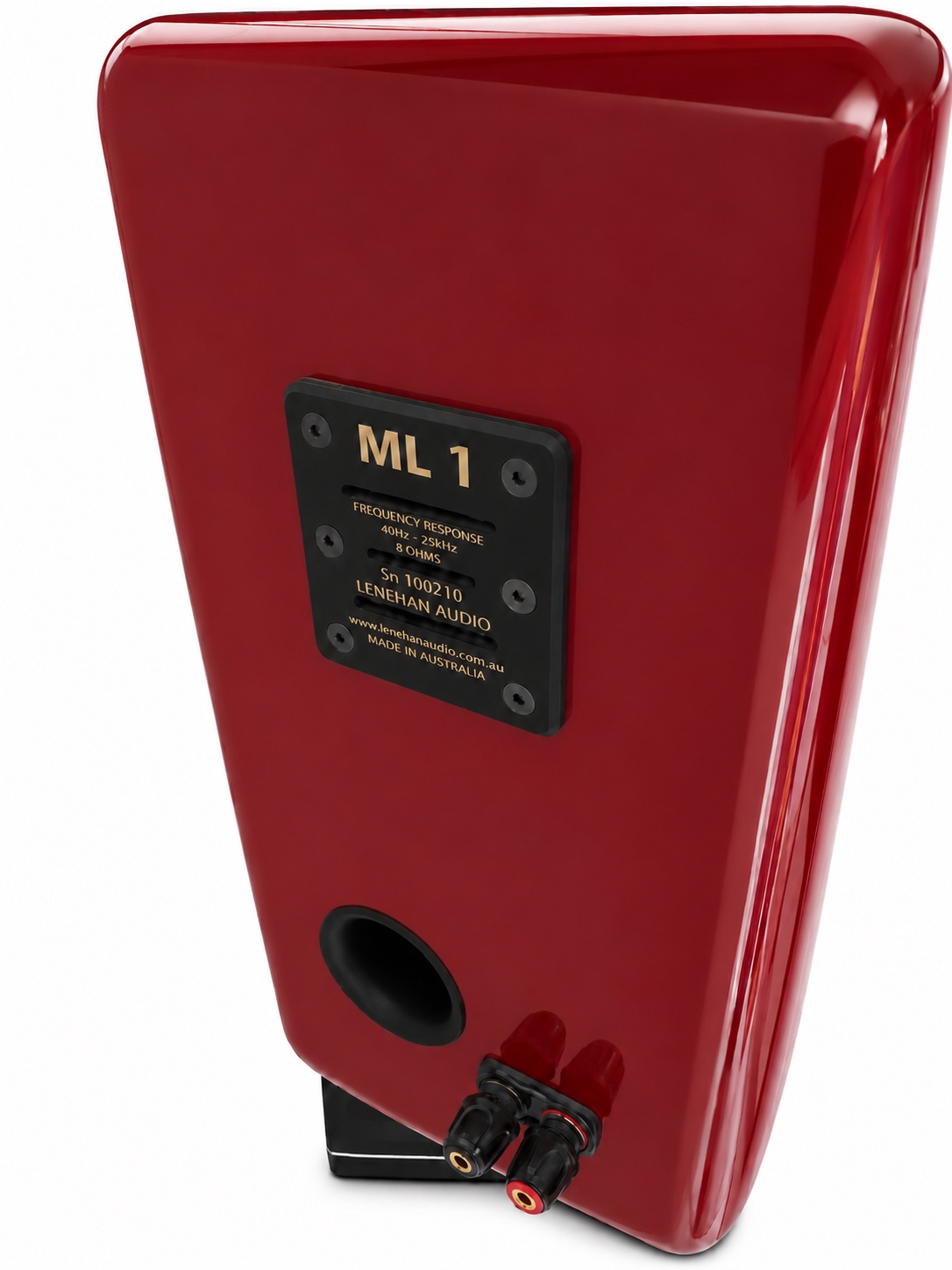
The name ML1 has been used across production revisions, and Lenehan also offered Plus R and Reference models. If you are buying used, ask for a photograph of the back plate of the actual pair. The figures in the table below are the maker’s published base-model figures, including a frequency response quoted in room. A different set of numbers on an older plate is a good reason to establish the revision before using a specification to predict how that pair will behave at home.
Voices at an evening listening level

Album: The Very Thought of You
Artist: Emilie-Claire Barlow
Track: “The Very Thought of You”
Source: CD
Format: Stereo PCM · 16-bit / 44.1 kHz
Barlow is the singer behind my impression of the ML1, and the title song from The Very Thought of You puts that attraction in focus. Her phrasing has room to breathe while the accompaniment continues underneath. The interest lies in the whole arrangement: the end of a vocal line, the space before the next one and the way the musicians carry the song across it. Barlow arranged and produced the album. That sense of a singer shaping the performance from within makes it a rewarding CD to hear at an ordinary evening level.

Album: Modern Cool
Artist: Patricia Barber
Track: “Company”
Source: CD
Format: Stereo PCM · 16-bit / 44.1 kHz
“Company” from Patricia Barber’s Modern Cool adds a different balance of voice, low notes and percussion. The stronger accents give the music momentum, but the quieter material around them matters just as much. A standmount’s clarity has little value if the bass loses its pitch as the level comes down. This recording makes that relationship easy to follow without turning the session into a test of maximum output. The ML1’s coherent low-level presentation is the quality I value here: an intelligible musical picture with a convincing centre, rather than a small speaker trying to impress through sheer size.
What I would check before adding a subwoofer
The ML1’s size makes the subwoofer question almost inevitable. My first move would be to listen from a second position, with the speakers and volume control exactly where they were. If a troublesome bass note changes dramatically when you move the chair, the room is giving you information worth acting on. A subwoofer may eventually be the right addition. It is a much easier decision once you know which part of the existing presentation you want to extend and which part you want to preserve.
For me, the ML1 earns its place through the things it does at the levels I use. A voice has presence and space, the image stays clear, and the music remains intelligible as the volume comes down. Anyone considering a pair should establish the revision, allow for stands and spend at least one whole song at the level they would use late in the evening. That last part of the audition is where I’d expect a buyer to decide whether the ML1 offers them what I heard in Barlow’s singing.
Specifications
Reference specifications from Lenehan’s base ML1 page. The production revision of the reviewed pair is unconfirmed; earlier versions may differ. These are not ML1 Plus R or Reference specifications.
| Specification | Details |
|---|---|
| Type | Two-way ported standmount loudspeaker |
| Tweeter | Chambered textile dome, approximately 25 mm |
| Mid-bass driver | Nomex diaphragm, approximately 140 mm |
| Quoted frequency response | 45 Hz–25 kHz, ±1.5 dB, in room |
| Sensitivity | 86 dB at 2.83 V/1 m |
| Nominal impedance | 8 Ω |
| Recommended amplifier power | 20–300 W |
| Dimensions (H × W × D) | 325 × 170 × 255 mm |
| Published weight | 12 kg per speaker for the version on Lenehan’s current base ML1 page |