
My B&W 800Ds were already capable of substantial bass. Adding Velodyne’s original DD15 to that system raised a better question than how much lower it could go. Could a separately placed bass driver make the notes easier to follow at my chair while the main speakers stayed where they gave me the stereo image I liked? That is what makes the DD15 interesting. It gives the owner both the means to change the bass and a way of seeing broadly what those changes have done.
My DD15 was part of the B&W 800D and Classé system, alongside the CA-M400 monoblocks, CDP-202 player and CP-700 preamplifier. These were already substantial speakers and electronics. With speakers like those, the sub needs to join in at the right level and over the right range. Simply turning it up can make the overlap more obvious.
Two feedback systems with different jobs
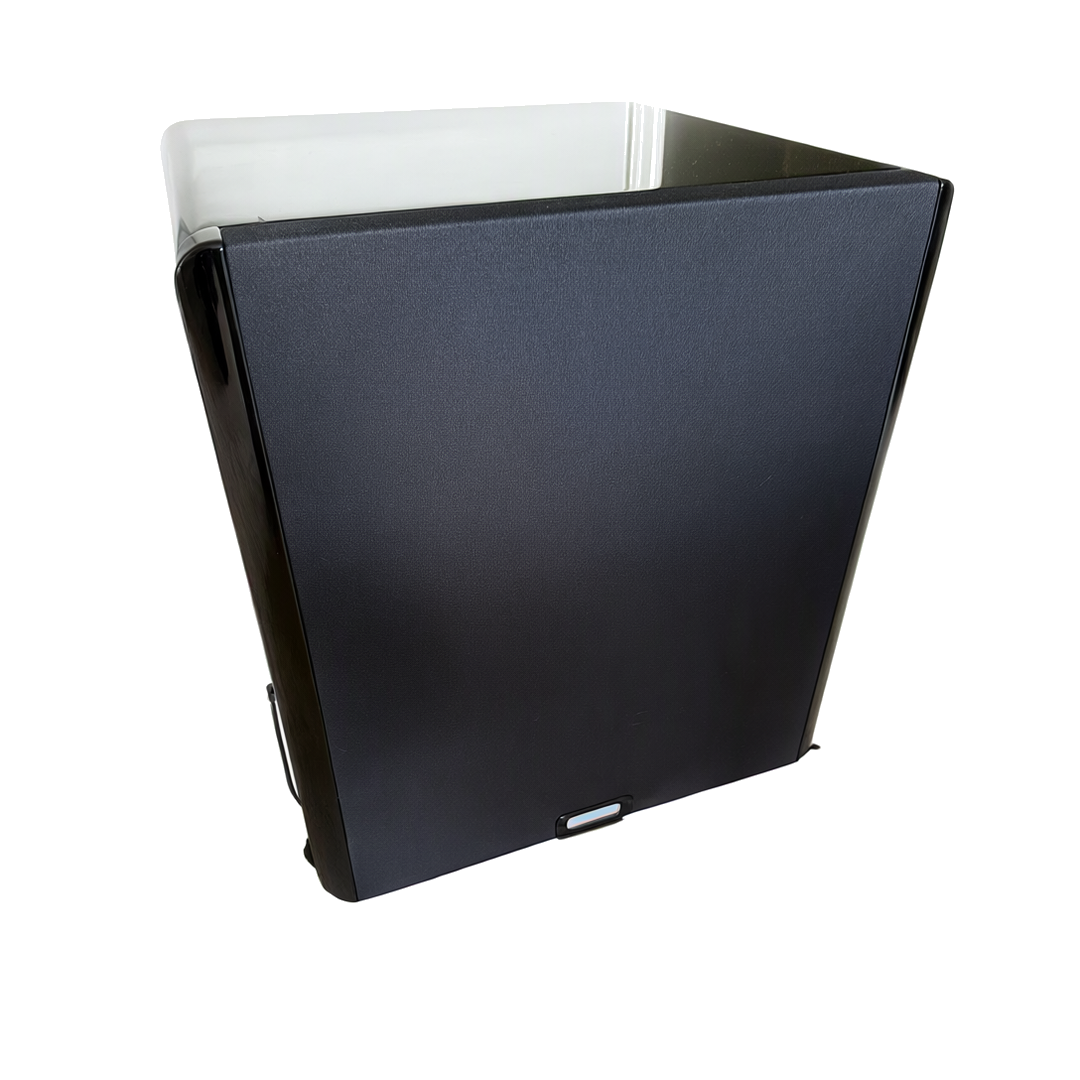
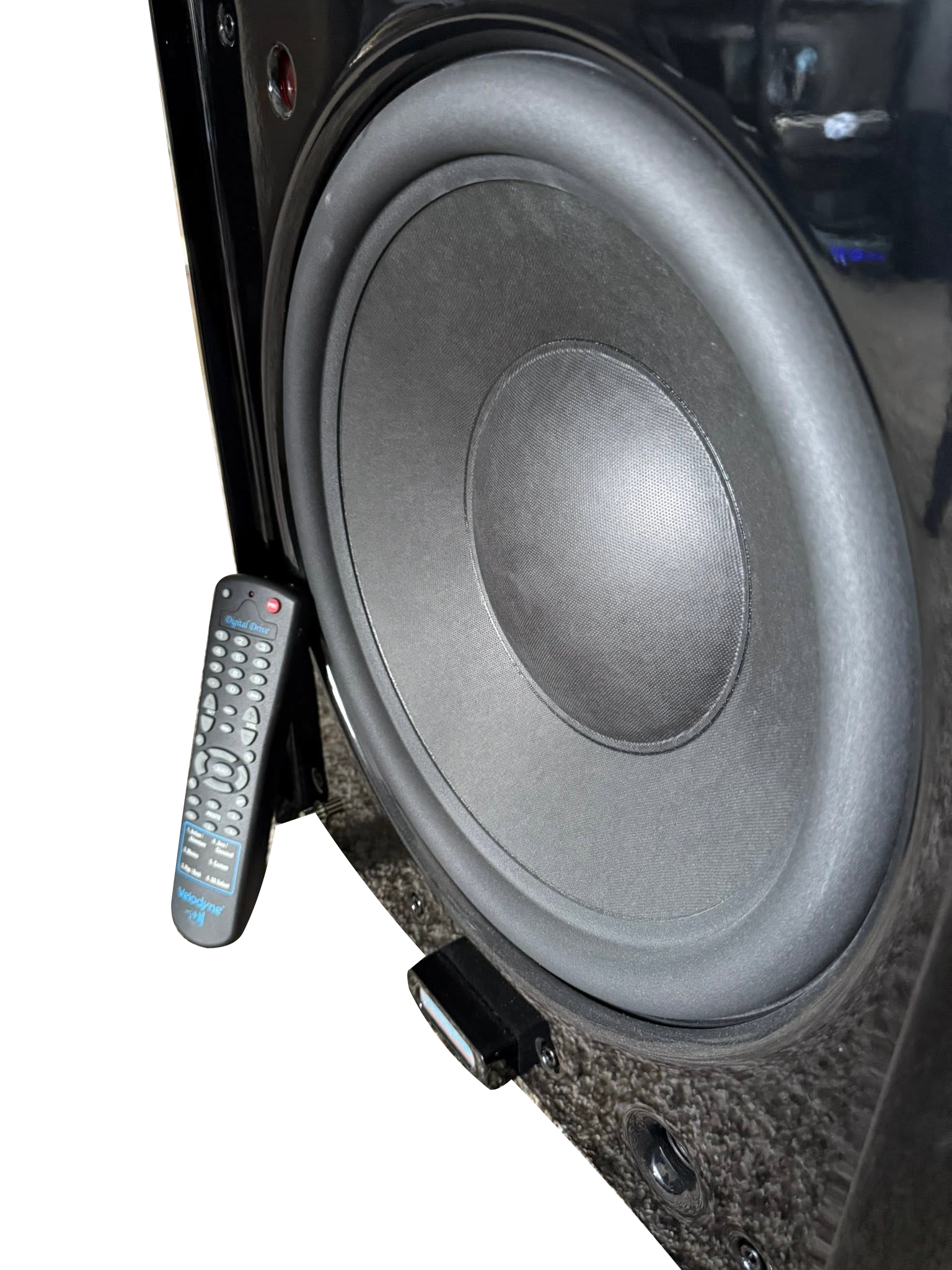
The DD15 uses a large driver in a sealed cabinet, with its own Class D amplifier. It gives you control over the bass without having to move the main speakers every time you want to try another position. That freedom is useful when the mains already have a good stereo image. A subwoofer can sit somewhere else, where its contribution works better with the room.
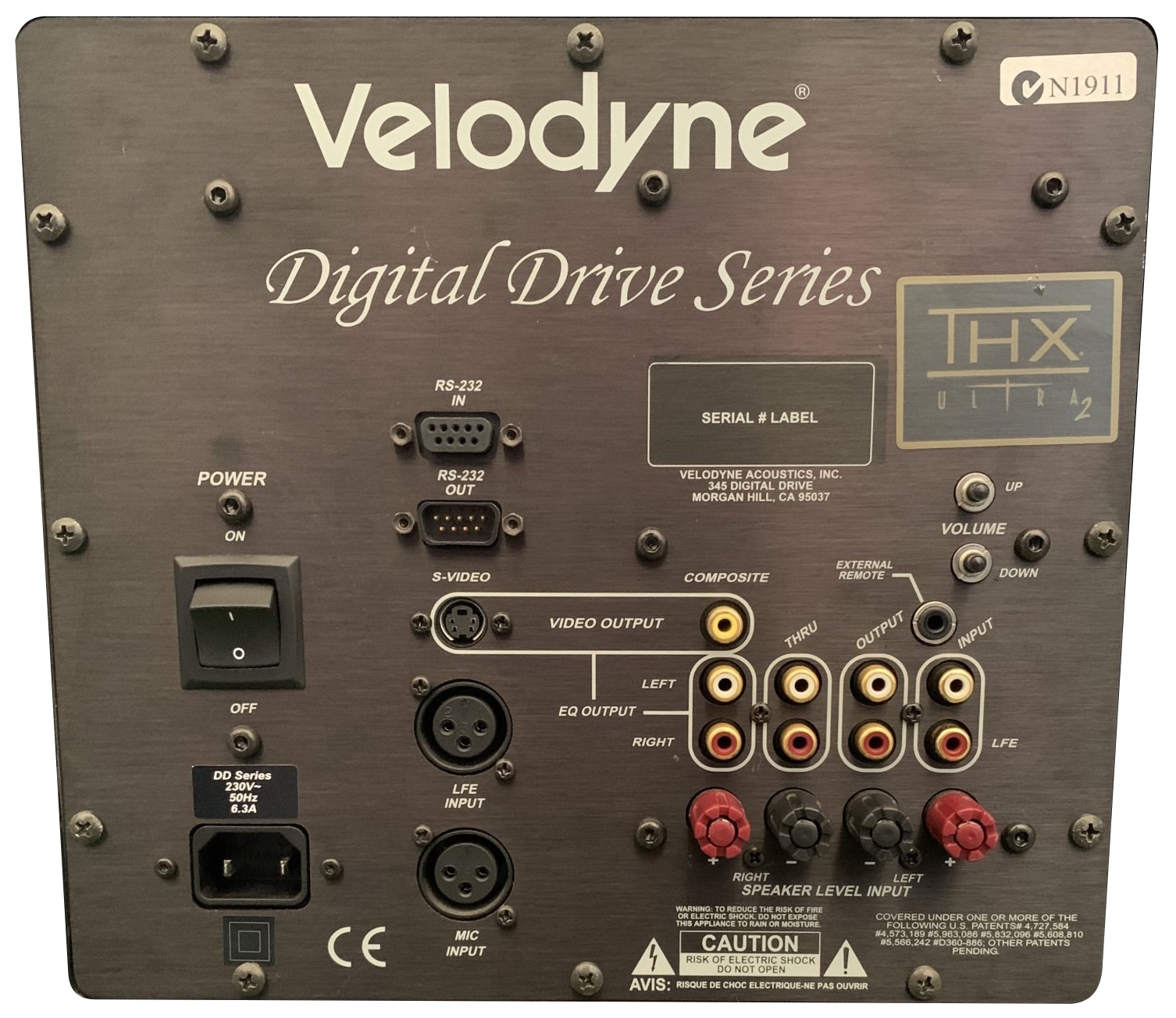
Two systems address different problems. The servo monitors cone movement and feeds that information back to the electronics to reduce distortion. Room equalisation uses a microphone to assess what reaches the listening position. The DD15’s parametric EQ lets you adjust that response, alongside crossover, phase and level controls. A composite or S-video connection puts the setup display on a monitor, with the remote handling most adjustments.
A microphone in the room and a sensor on the driver answer different questions. A cone can follow its signal accurately while the note arriving at the sofa is much louder than its neighbours. Equally, a level that looks reasonable on the display tells you little about whether a double bass still sounds like someone choosing how long to hold a string. Keeping those two ideas separate makes the setup less mysterious. You can work on the interaction with the room without expecting a change of crossover to alter the driver's construction.
Placement comes first. Velodyne’s manual recommends reducing response peaks rather than trying to fill deep cancellations with more boost. There’s a limit to what extra amplifier output can achieve when sound is cancelling at the chair. Moving the sub or listening position may change that problem before any EQ is applied. The screen gives you a way to check instead of guessing from one impressive bass note.
Get the blend right and the DD15 can add convincing depth without a bloated tail following each note. That’s the useful part of its adjustment options. The response display is fairly coarse, though, so treat it as a setup aid rather than a precision laboratory plot. Use it to find the broad problems, then listen to the music. A tidy-looking curve is only part of the job; the bass still needs to make sense alongside the rest of the band.
Bass parts worth learning by ear
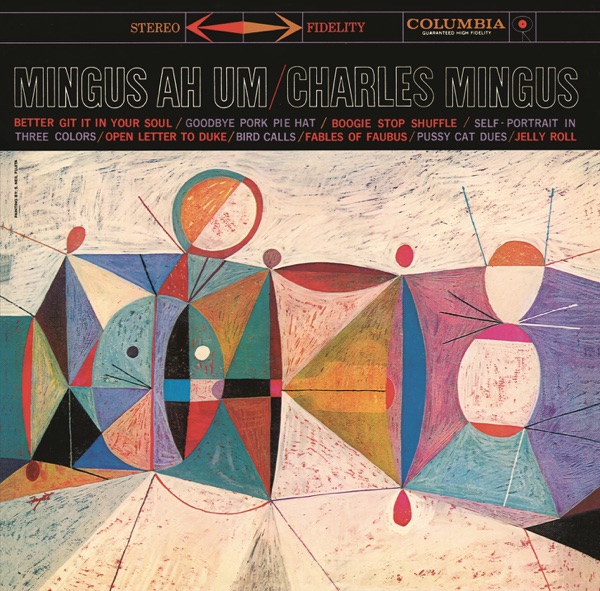
Album: Mingus Ah Um
Artist: Charles Mingus
Track: “Better Git It in Your Soul”
Source: CD
Format: PCM · 16-bit / 44.1 kHz
For music, I’d try Charles Mingus’s Mingus Ah Um, starting with “Better Git It in Your Soul”. Follow Mingus’s bass against Dannie Richmond’s drums as the horns join the argument. The point is to follow the bass line through the band, with changes in pitch remaining distinct. More weight isn’t automatically more information.
“Pussy Cat Dues” slows things down. Give the spaces between bass notes some attention, as well as the notes themselves, and listen for anything that hangs on into the next phrase. Listen for how the subwoofer blends with the main speakers. Keep the level sensible enough that the rest of the band still has its say.
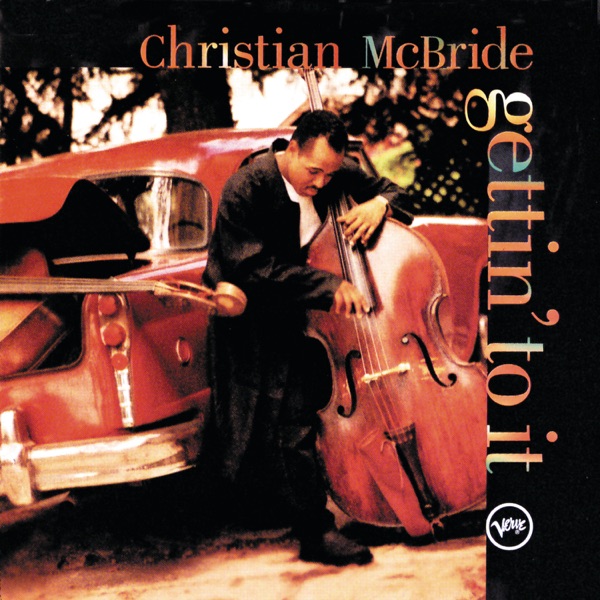
Album: Gettin’ to It
Artist: Christian McBride
Track: “Gettin’ to It”
Source: CD
Format: PCM · 16-bit / 44.1 kHz
Christian McBride’s “Gettin’ to It” gives the bass player a different role. Listen through a phrase and try to remember its contour, then play it again with the subwoofer muted at the same main-speaker level. Listen for which notes change rather than simply registering that there is less bottom end. If one pitch takes a conspicuous step backwards while the others barely change, you have a specific part of the crossover region or room response to investigate. You can return to the same few bars after moving the sub instead of relying on a general memory of how big the system sounded.
What I’d check on a used DD15
I’d put the remote, calibration microphone and compatible display connection on the list of things to inspect along with the cabinet and driver. The older video outputs are easy to overlook in a room organised around HDMI. Ask to see the setup screen and change a setting, then restore it. That simple demonstration establishes whether you will actually be able to use the adjustments that distinguish this model. Be sure you are reading the manual for the original Digital Drive unit when you do it.
Write down a good starting setting before experimenting further. It’s easy to change phase, crossover and level in one sitting and discover that a louder passage sounds better without being able to say which adjustment helped. A second listening position makes a useful final check, especially if other people use the room. The best setting for a single chair can be a poor compromise for the rest of the sofa.
To my ears the DD15 was a solid performer with deep, accurate bass. Its value alongside the 800Ds was the opportunity to tune that extension where I listened. I would spend the time integrating it, then ask somebody to turn the display off and put the Mingus record back on. If the bass is easy to follow through the band and the location of the sub no longer interests me, that extra cabinet has earned its place.
Specifications
Manufacturer specifications for the original DD-15, not DD-15+. Frequency response follows the model-specific DD-15 sheet. Control ranges can vary with firmware; the reviewed unit’s version is unconfirmed.
| Specification | Details |
|---|---|
| Type | Sealed active subwoofer with digital servo control |
| Driver | Nominal 380 mm, forward firing |
| Amplifier | Class D; 1250 W RMS, 3000 W dynamic output |
| Published frequency response | 15–120 Hz, ±3 dB, per the DD-15 model sheet |
| Room equalisation | Eight-band graphic/parametric EQ with microphone-based setup |
| Audio inputs | RCA line/LFE, balanced XLR LFE and speaker-level inputs |
| Audio outputs | RCA through and high-pass outputs; test-signal output |
| Setup display | Composite video and S-Video; remote control |
| Dimensions (H × W × D) | 508 × 457 × 457 mm, including feet, grille and knobs |
| Shipping weight | Approximately 45 kg; manufacturer sheet does not separately specify net weight |
| Finishes | Black Gloss, Cherry or Maple |