
Wilson Audio
Alexx V.
Why do the upper boxes on the Wilson Audio Alexx V move? The reel opens the door to its manually adjustable modules, driver design and setup.
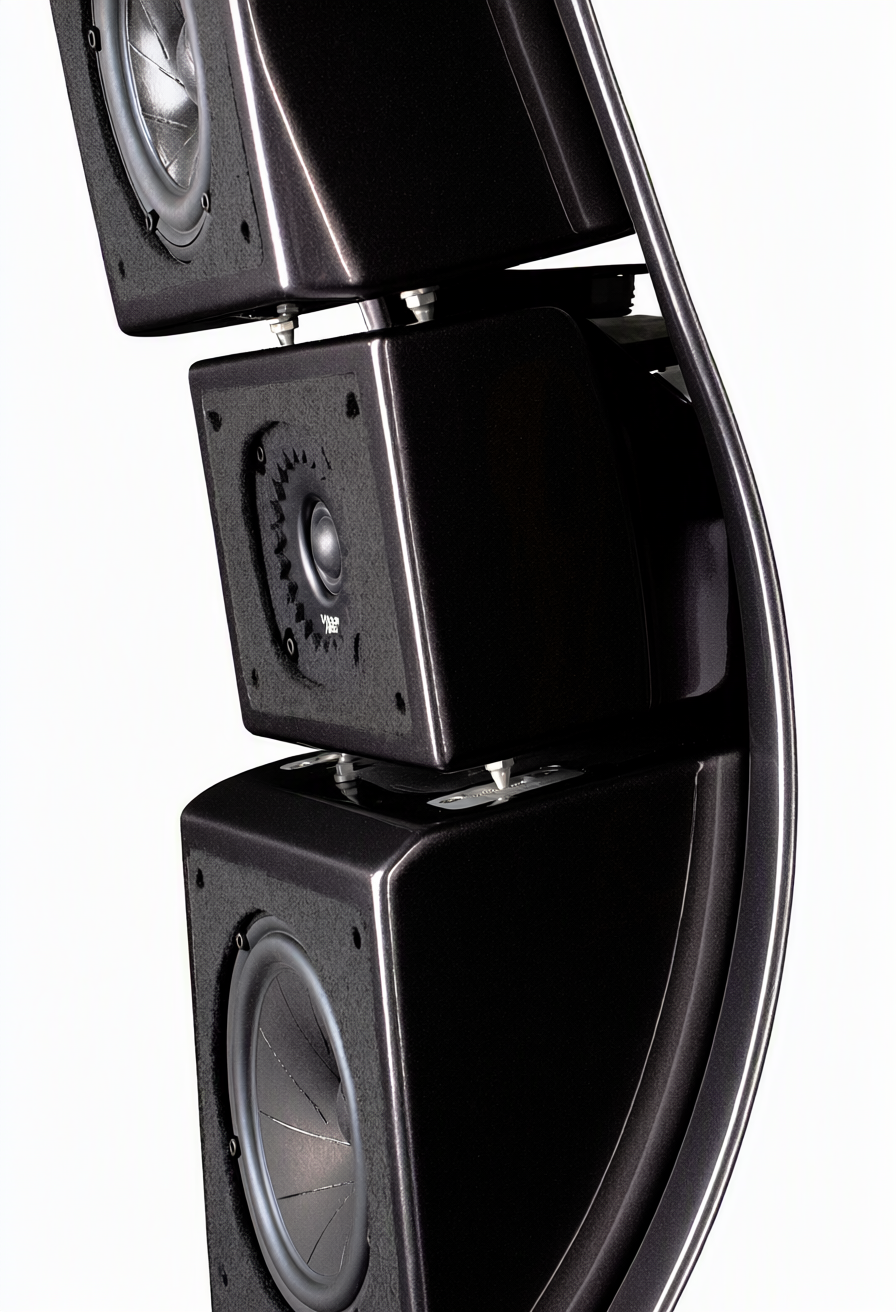
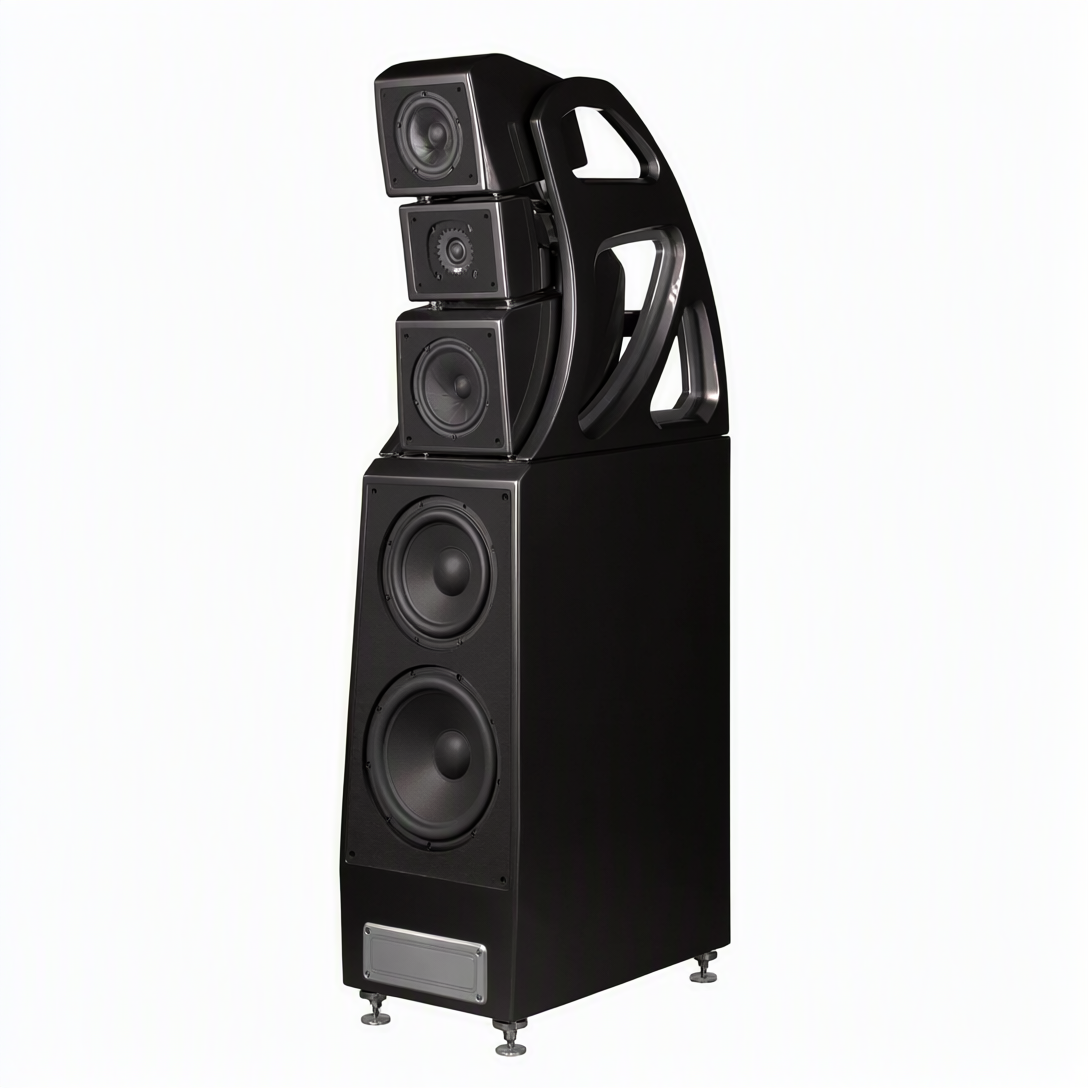
Why do the top boxes on the Wilson Audio Alexx V move? The reel starts with the most revealing feature of this loudspeaker: its upper modules can be adjusted to suit the listening position. The arrangement gives the installer a way to set the relationship between the drivers and the seat. Wilson describes this as time alignment. It is a physical setup process, carried out by hand, with the speaker’s open gantry providing access to the modules. The Alexx V replaced the original Alexx in 2021, bringing changes to the drivers, crossover and supporting structure. Understanding those changes starts with the parts you can see.
Five drivers, distinct jobs
The driver array combines a one-inch doped-silk CSC dome tweeter with two midrange units and two woofers. The tweeter’s diaphragm remains silk; the carbon fibre mentioned in the reel narration belongs to the rear-wave chamber behind it. Wilson makes that chamber in-house using 3D printing. Keeping those two components distinct matters when reading the specification: a carbon-fibre chamber does not make this a carbon-dome tweeter.
The midrange section uses a 5.75-inch driver alongside a new seven-inch QuadraMag unit. Below the upper assembly, 10.5-inch and 12.5-inch woofers handle bass duties. These five drivers form the complete complement. Wilson’s design brings different driver sizes together within one loudspeaker, with the adjustable upper modules making their positioning an explicit part of installation.
Setup is part of the design
Wilson says the open gantry improves access to the upper modules, making their adjustment easier. The practical point is that the listening seat belongs in the setup conversation from the beginning. The modules do not sense where someone is sitting or track movement automatically. Their positions are set for the intended listening location, following the manufacturer’s installation procedure.
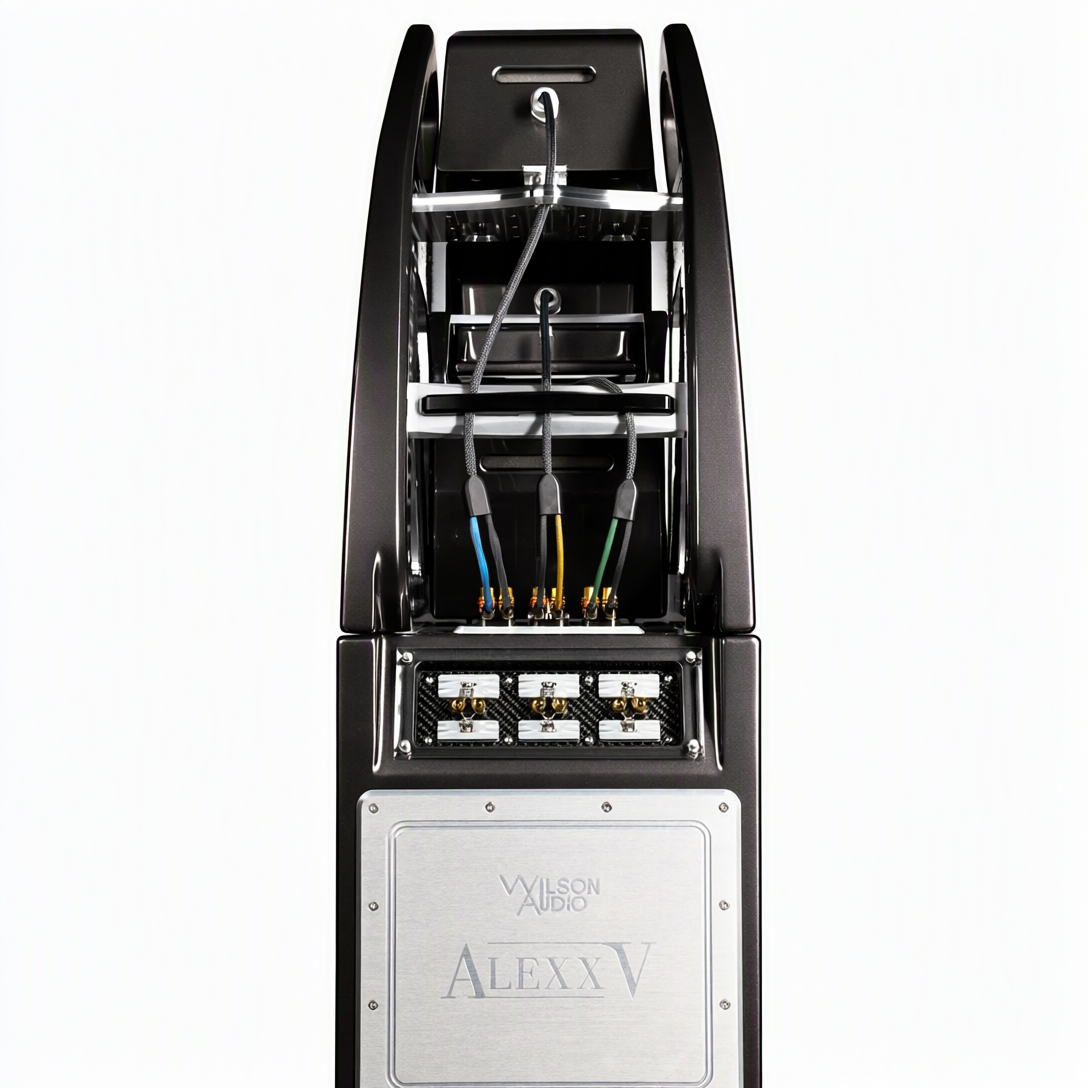
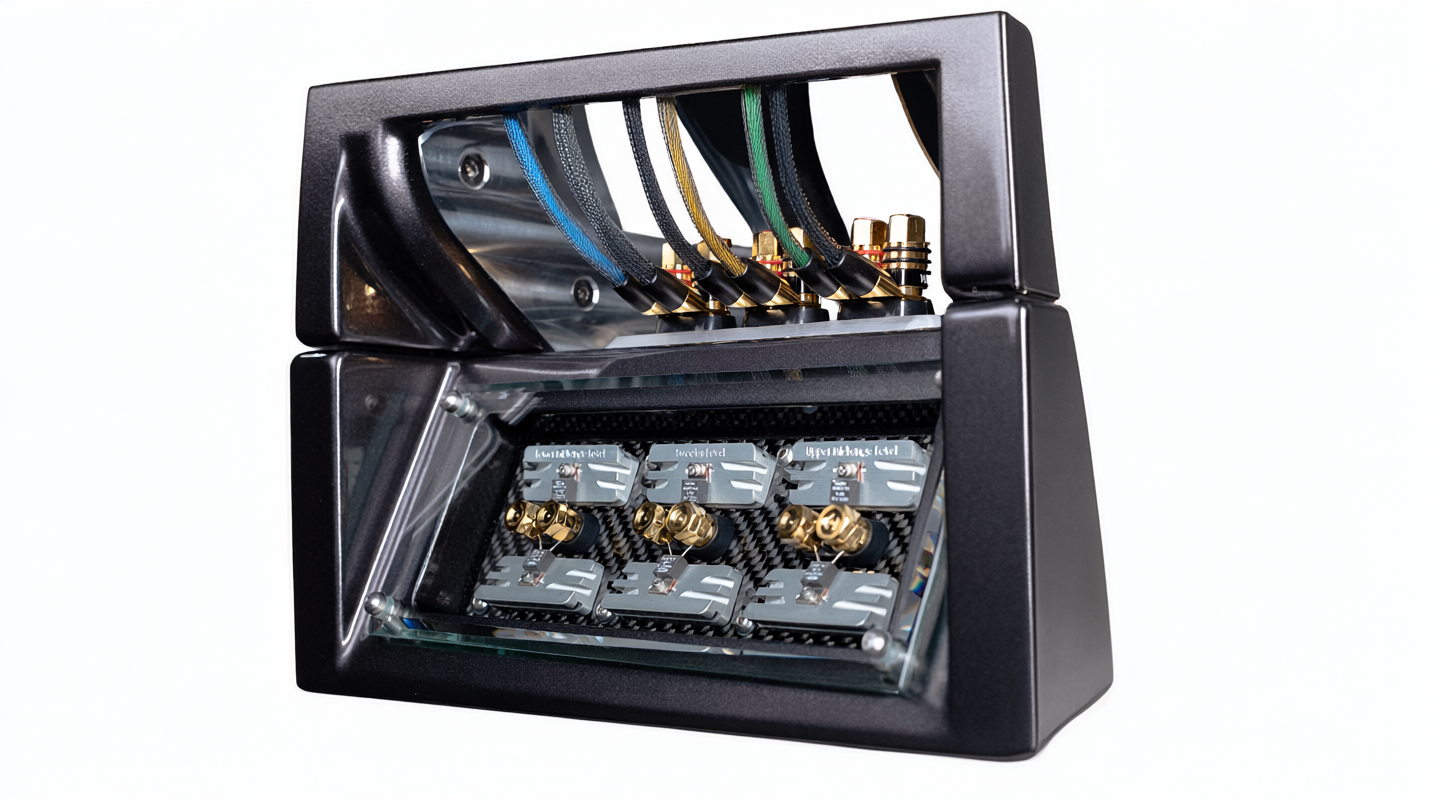
The changes extend beyond the visible frame. Wilson revised the crossover and introduced its Acoustic Diode feet. Around the back, the colour-coded wiring and accessible resistor bank shown in the reel provide another view of the design. That resistor bank should not be mistaken for a photograph of the complete crossover. For owners, the manual is the appropriate starting point for understanding the adjustment procedures and the parts involved, rather than treating accessible connections as an invitation to experiment without guidance.
Look beyond the sensitivity figure
Wilson specifies sensitivity at 92 dB for one watt at one metre, measured at 1 kHz. That is useful information, but it does not describe every demand the speaker places on an amplifier. Nominal impedance is four ohms, with a minimum of two ohms at 250 Hz. Those conditions deserve attention when choosing amplification; the sensitivity number alone is not evidence that any amplifier will be a suitable partner.
The sensible system-matching question is whether the proposed amplifier is suitable for this load, considered alongside the room and intended listening level. The manufacturer’s published frequency response is 20 Hz to 32 kHz within a ±3 dB tolerance. As with the impedance figures, retaining the measurement conditions makes the specification more useful than quoting an isolated headline number.
Plan the installation
Each uncrated Alexx V weighs 226.8 kg. The quoted dimensions, without spikes, are 1610 mm high, 400.1 mm wide and 708.8 mm deep. These are practical planning details for access, placement and installation, rather than evidence of how a speaker will sound. Moving the cabinets and adjusting the upper assembly are different jobs, both worth allowing for before the system is in place.
The opening question brings the article back to the defining idea: the moving boxes are there to make deliberate setup possible. The Alexx V combines a substantial five-driver loudspeaker with a manually adjustable upper structure. Its engineering story makes more sense when the driver layout, listening position and amplifier requirements are considered together. Watch the reel below for an introduction to the design and its setup.
Specifications
| Specification | Details |
|---|---|
| Type / design | Modular, ported floorstanding loudspeaker |
| Tweeter | 1″ doped-silk CSC dome |
| Midrange | 5.75″ midrange driver 7″ QuadraMag midrange driver |
| Woofers | 10.5″ woofer 12.5″ woofer |
| Frequency response | 20 Hz–32 kHz, ±3 dB |
| Sensitivity | 92 dB at 1 W / 1 m / 1 kHz |
| Nominal impedance | 4 Ω; 2 Ω minimum at 250 Hz |
| Recommended amplifier power | 50 W per channel minimum |
| Crossover frequency | Not stated in manufacturer specifications |
| Dimensions (H × W × D) | 1,610 × 400.1 × 708.8 mm, without spikes |
| Weight | 226.8 kg per speaker |
| Finishes | WilsonGloss colours; standard, upgrade and custom options |