
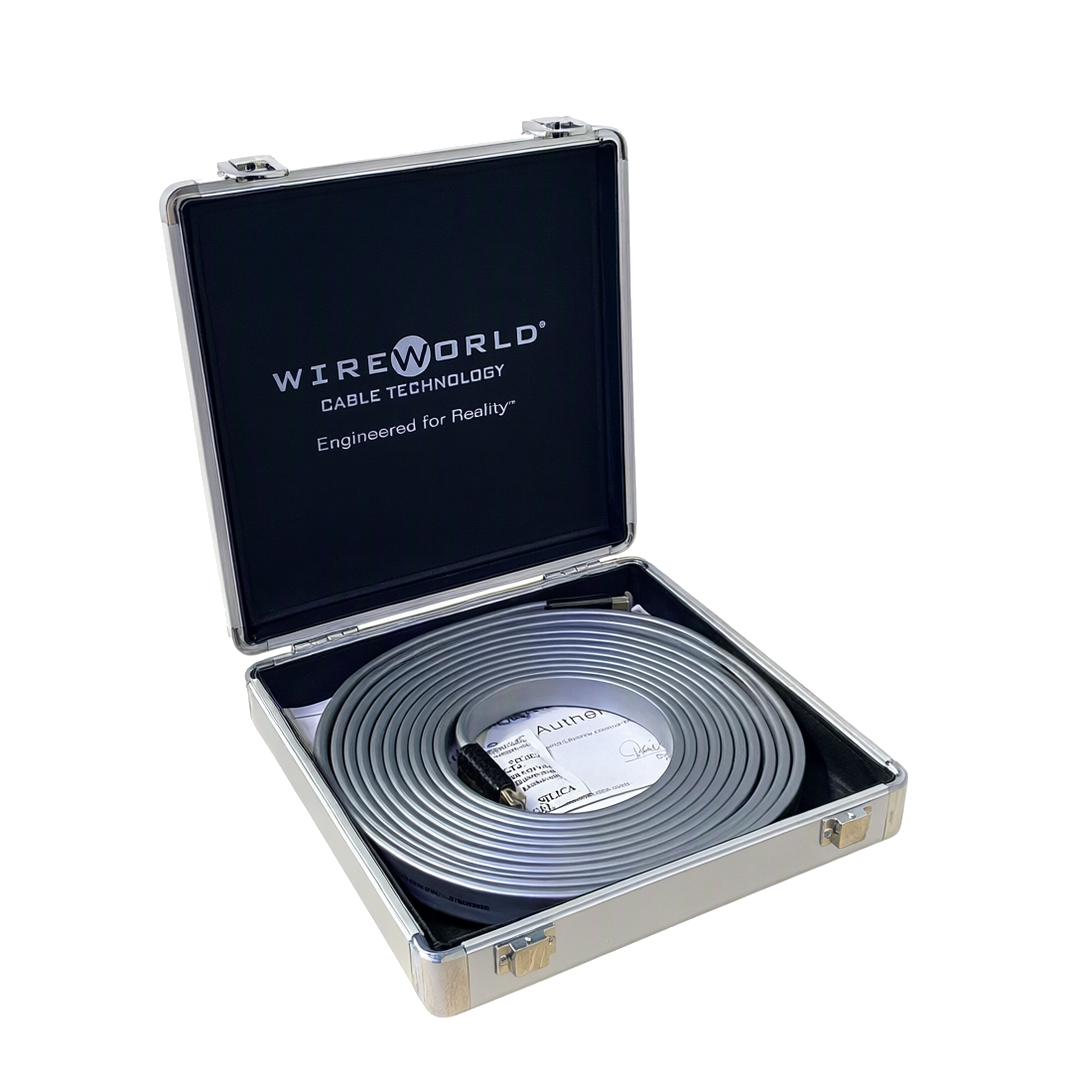
There was an HDMI plug at each end of the Wireworld Platinum Starlight 7 in my system, and neither one went near a screen. The cable connected my PS Audio DirectStream transport to the DAC over I²S. What did I want from that connection, and what could somebody with a different pair of boxes reasonably take from my experience? The identity of the sockets matters here just as much as the name on the cable.
I used the Wireworld Platinum Starlight 7 between my PS Audio DirectStream transport and DAC, and I couldn’t have been happier with the results. The sound was dynamic, with the clarity and detail I wanted. I found the cable extremely transparent, and its solid construction was reassuring. That remains my view of it in that connection.
Start with the signal at each end
PS Audio’s DirectStream manual makes that distinction explicit. Its I²S input needs a compatible I²S source; a normal HDMI audio/video output won’t do the job. The Wireworld cable itself can be used for ordinary HDMI duties, but it doesn’t translate between the two protocols. Changing the cable cannot make an incompatible source and DAC understand each other. With equipment from different manufacturers, check their stated I²S compatibility before assuming the matching sockets are enough.
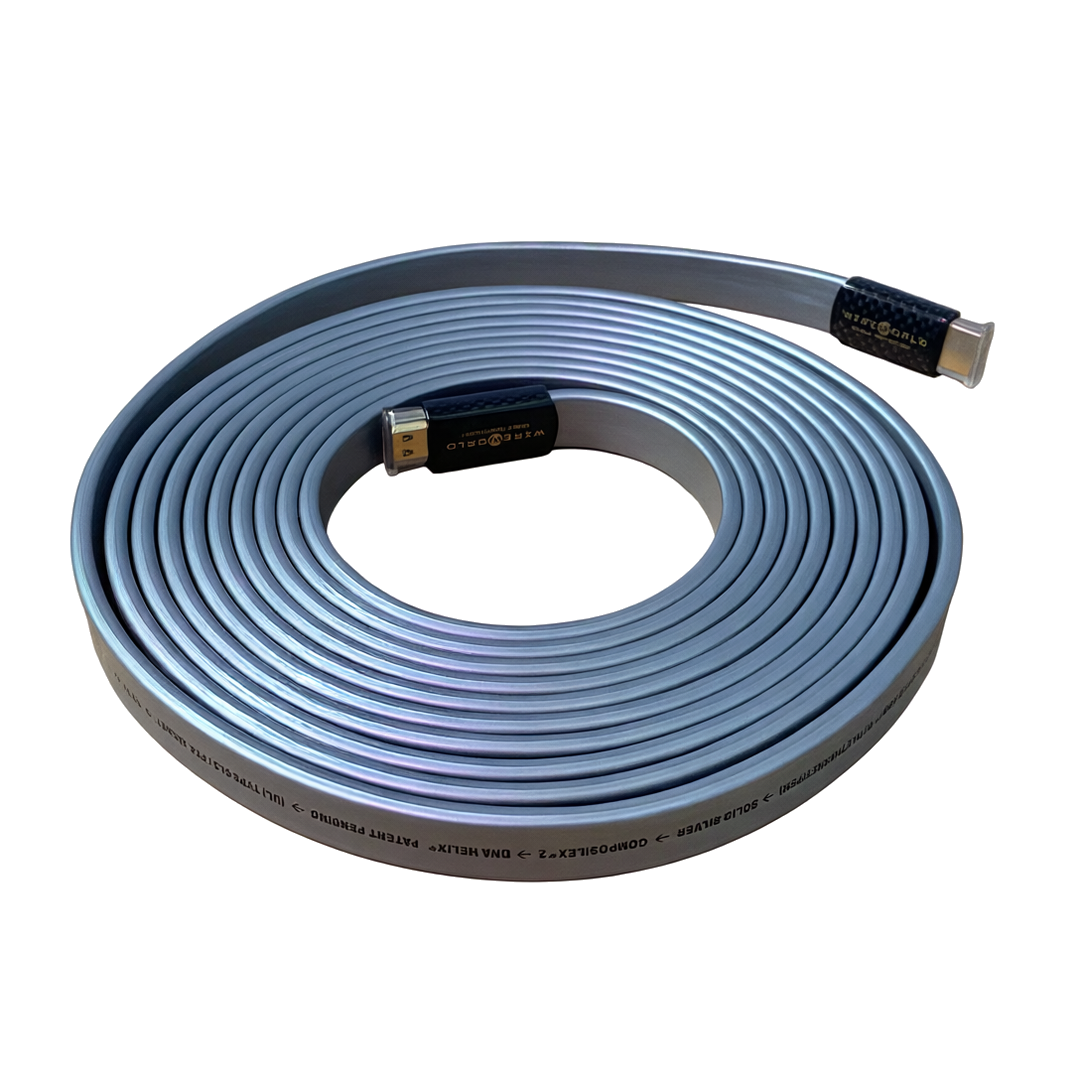
This is the Platinum Starlight 7 HDMI cable, which Wireworld identified as PSH in its catalogue. The later Platinum Starlight 48 is a different model, and the company used similar names for other kinds of digital cable. Check the full name when looking at one. For my audio connection, the relevant point was the I²S link between the PS Audio components, not the video claims attached to an HDMI cable.
Think about the job done by the transport. It reads a disc and sends digital audio on to a converter. In this arrangement I²S carries the data and the timing signals separately. The use of a mass-produced connector gives the owner a practical choice of cable lengths. It also makes two very different sockets look interchangeable. If a system fails to lock to the signal, my first question would be what the manuals say about those particular outputs and inputs. The cost of the cable would come a long way down the list.
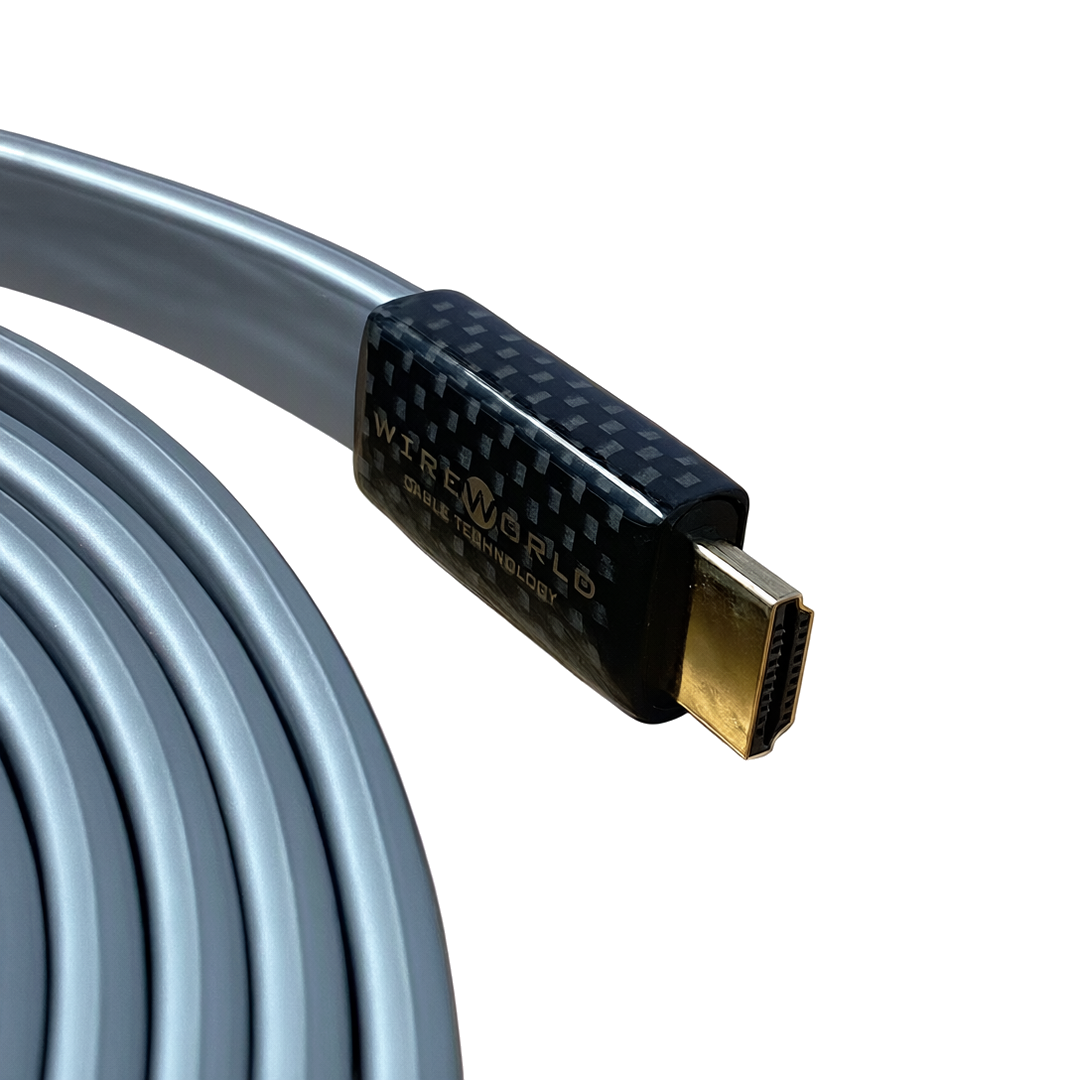
Inside the 7, Wireworld used solid silver conductors in its DNA Helix arrangement, with Composilex 2 insulation. The company also specified carbon-fibre connector housings and HD-Grip plugs. These are details of how it was built; they don’t establish what every listener will hear. My enthusiasm comes from the sound I enjoyed with it in the system, rather than a claim that silver alone explains the result.
The physical fit deserves a look before choosing a length. Leave enough room behind the components for the plugs and cable to sit comfortably, without pulling sideways on the sockets. PS Audio recommends a short I²S connection in the transport manual. Short still has to reach without strain, particularly when the transport and DAC sit on different shelves.
A tenor line and a blues guitar

Album: Soulville
Artist: Ben Webster
Track: “Soulville”
Source: CD
Format: PCM · 16-bit / 44.1 kHz
For an audition, I’d take Ben Webster’s Soulville on CD. The 1957 recording puts his tenor alongside Oscar Peterson’s piano and Herb Ellis’s guitar, giving you different instrumental textures to follow. Start with the title track, then “Late Date”. Listen to the shape of Webster’s phrases as well as the sound of the saxophone, and give the accompaniment time to register.
If you’re comparing connections, keep that same disc and the playback level consistent. A different remaster changes the comparison before the cable gets involved. Small differences are also easier to overstate when you jump between unrelated snippets. Let a passage run, return to it, and decide whether any change remains worthwhile once you’re following the musicians again. The recording should hold your attention for longer than the cable does.

Album: Mojo Hand
Artist: Lightnin’ Hopkins
Track: “Mojo Hand”
Source: CD
Format: PCM · 16-bit / 44.1 kHz
On Lightnin’ Hopkins’s “Mojo Hand”, begin by following the words and then listen to how the guitar answers between vocal phrases. A short bent note can have as much character as a long sustained one. I’d play a whole verse before comparing anything, because it is much easier to recognise a musical exchange on the second pass than to remember the exact brightness of a string. The suggested CD also keeps the disc transport in the path throughout. Moving to a stream midway through this particular comparison would take the component under discussion out of the circuit.
What a comparison can tell you
There are two quite different experiments an owner might try. Replacing one cable with another on the same I²S link keeps the transport output and DAC input fixed. Switching from I²S to coaxial also changes which output and input circuits are in use. Both are reasonable things to do when deciding how to connect the boxes. Only the first addresses which cable you prefer in that particular link. Keeping a note of the connection and the disc is enough to stop the two conclusions becoming tangled later.
With a used cable I’d inspect both plugs in good light, check the indicated model and length, and confirm that the DAC recognises the material I want to play. Budget for the space behind the rack as well as the distance between sockets. A plug can be fully seated on an open bench and pushed sideways by the wall once the shelf goes back. A secure fit was part of what I appreciated about the Wireworld, and a sensible route helps preserve it.
Would I use the Platinum Starlight 7 there again? Yes. The clarity, dynamics and solid construction suited my DirectStream pairing. I’d make the same judgement for another system by listening to that system, starting with a compatible link and a record I knew well. An owner who can follow Hopkins’s phrasing every bit as readily with a cable already in the drawer has a perfectly good reason to leave that cable in place.
Specifications
Wireworld’s period specifications for Platinum Starlight 7 HDMI (PSH), not the later Platinum Starlight 48. The length used in the reviewed system was not recorded.
| Specification | Details |
|---|---|
| Model | Platinum Starlight 7 HDMI; catalogue code PSH |
| Cable design | 24-conductor DNA Helix |
| Conductors | Solid silver, 23 AWG |
| Insulation | Composilex 2 |
| Plug contacts | HD-Grip; silver and gold plating |
| Connector housings | Carbon fibre |
| Published HDMI capability | HDMI 2.0 / 4K, as stated in Wireworld’s period catalogue |
| Audio use discussed | I²S between compatible PS Audio components; the cable does not convert HDMI audiovisual signals to I²S |